
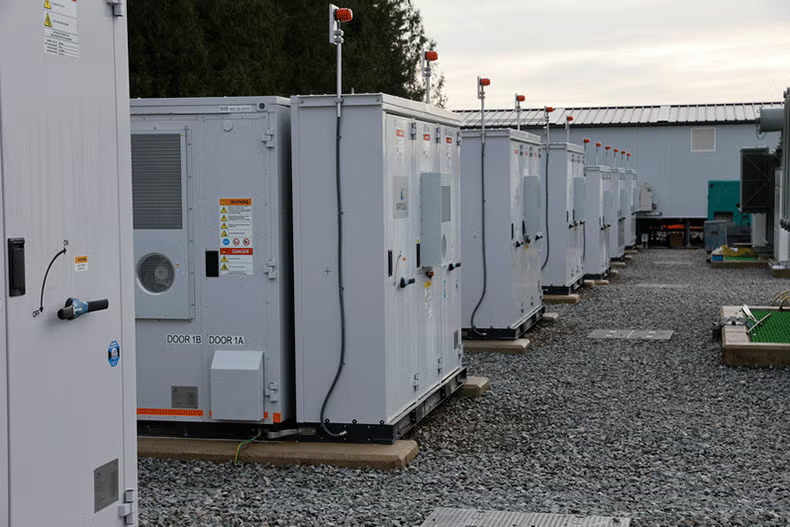
Battery energy storage EPC delivers comprehensive project delivery for systems that stabilize renewable integration. These setups store surplus energy from solar or wind and dispatch it when generation dips. A capable battery energy storage EPC contractor manages engineering details, component sourcing, and on-site construction. This integrated method reduces interface issues between phases. Knobelsdorff Enterprises applies such coordination in utility-scale efforts across Minnesota.
Grid operators face increasing pressure to balance variable renewables. Storage mitigates curtailment and supports peak shaving. Lithium-ion batteries dominate due to declining costs and performance gains. EPC providers align system design with utility interconnection requirements. Early modeling identifies optimal sizing and placement.
Projects often pair storage with existing or new solar arrays. This hybrid configuration maximizes output and provides ancillary services. Engineering teams simulate dispatch strategies under different load profiles.
Engineering Challenges in Battery Energy Storage Systems
Design starts with site-specific assessments. Soil conditions influence foundation choices for containerized batteries. Thermal management prevents degradation in extreme temperatures. Minnesota winters demand robust insulation and auxiliary heating.
Control systems coordinate charging and discharging. Advanced algorithms optimize based on market signals or grid needs. Safety features include ventilation, fire detection, and rapid shutdown capabilities.
Battery energy storage EPC requires precise electrical integration. Transformers step up voltages for grid tie-in. Switchgear protects against faults. Experienced contractors incorporate redundancy to maintain uptime.
Knobelsdorff Enterprises addresses these elements in their renewable portfolios. Their work demonstrates practical adaptations for northern climates.
Procurement and Supply Chain Realities
Component selection shapes project economics. Battery modules vary in chemistry and cycle life. Suppliers face global demand pressures, extending lead times. Diversification across vendors mitigates delays.
Inverters handle power conversion with high efficiency. Bidirectional models enable seamless grid interaction. Balance-of-system items like cabling and enclosures complete the package.
A battery energy storage EPC contractor forecasts needs accurately. Contracts lock in pricing amid fluctuating material costs. Quality assurance during procurement includes factory testing and certifications.
Timeline alignment proves critical. Delays in one area cascade through the project. Coordination ensures delivery matches construction sequencing.
Construction Execution for Storage Facilities
Site work begins with grading and access roads. Concrete foundations support heavy enclosures. Cranes position battery containers precisely.
Electrical installation connects modules in series and parallel. High-voltage terminations require skilled labor. Grounding and bonding follow strict codes.
Testing occurs in stages. Individual string checks verify voltage balance. System-level trials confirm communication with SCADA.
Commissioning verifies performance metrics. Round-trip efficiency and response times meet specifications. Handover includes training for operations staff.
Knobelsdorff Enterprises executed these steps in the Marshall utility-scale solar array and BESS project. Their end-to-end delivery supported reliable integration.
Long-Term Operations and Maintenance
Post-commissioning, monitoring tracks key indicators. Sensors log cell voltages, temperatures, and state of health. Data analytics predict maintenance needs.
Firmware updates improve performance over time. Scheduled inspections check connections and cooling systems. Rapid response to anomalies prevents escalation.
Battery degradation occurs gradually. Replacement strategies extend asset life. Contracts often cover warranty enforcement and performance guarantees.
In portfolios spanning multiple sites, consistent practices ensure uniform reliability. This supports utility goals for decarbonization and resilience.
Firms with established renewable track records, such as Knobelsdorff Enterprises, bring accumulated insights to battery energy storage EPC. Their Minnesota-based projects illustrate effective strategies for scaling storage in real-world applications.
