
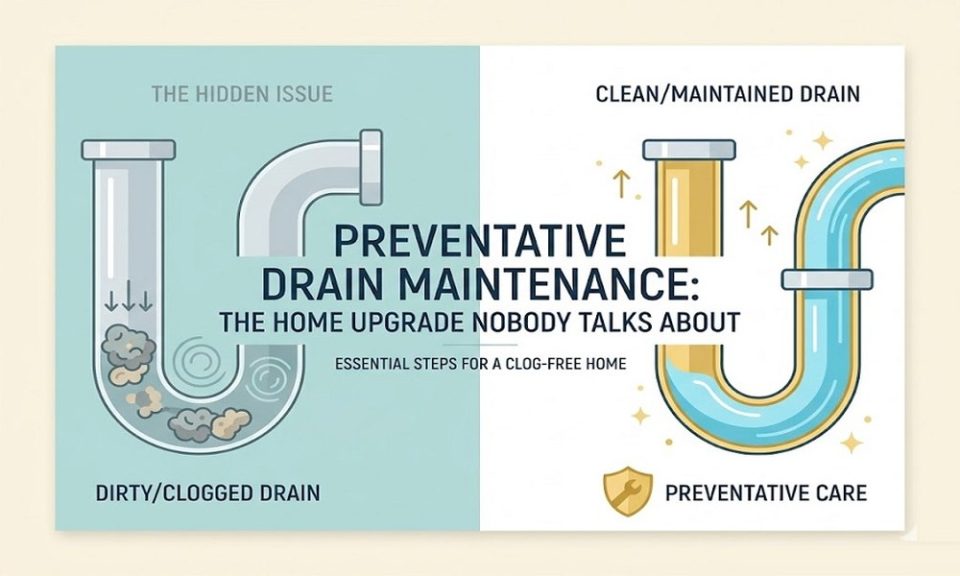
When homeowners think about upgrades, they picture fresh paint, new countertops, or a refinished deck. Nobody pins photos of drain lines to their vision board. But preventative drain maintenance is quietly one of the most valuable investments you can make in your home, and the fact that most people skip it is exactly why so many end up dealing with costly, inconvenient plumbing problems down the road.
This is the home upgrade nobody talks about. It’s time to change that.
Why Drains Get Ignored (Until They Can’t Be)
Out of sight, out of mind. That phrase could have been written specifically about residential drain systems.
Your home’s drain lines are doing constant, thankless work. Every shower, every load of laundry, every dinner dish rinsed into the sink sends water and waste through a network of pipes that most homeowners never think about. And that’s understandable. When your drains are working properly, there’s no reason to pay attention to them.
The problem is that by the time most people notice something is wrong, the issue has already been building for weeks, months, or even years. A slow drain doesn’t mean “minor inconvenience.” It often means buildup has been accumulating steadily, and the slow drain is just the part of the iceberg you can see.
This is exactly the pattern that routine drain maintenance breaks.
What “Preventative” Actually Means for Drain Systems
The word preventative gets thrown around a lot in home maintenance conversations, but what does it actually look like when it comes to your drain lines?
Preventative drain care is about addressing the conditions that lead to clogs, backups, and line damage before those conditions become problems. It’s not reactive. It’s not waiting for the kitchen sink to stop draining and then calling for help. It’s scheduling regular service with the goal of keeping your lines clear, your flow rate strong, and your plumbing system functioning the way it was designed to.
In practice, this can include:
- Professional line cleaning to clear accumulated grease, soap residue, hair, and mineral deposits from drain walls before they narrow the line enough to cause a backup
- Camera or TV inspections of sewer and drain lines to identify tree root intrusion, pipe damage, or buildup in sections you can’t access
- High-pressure water jetting to flush lines thoroughly rather than simply pushing a clog further down
- Routine checks on older pipes in homes where the plumbing infrastructure hasn’t been updated in decades
None of these services are glamorous. But each one is a meaningful, proactive step toward avoiding a much more expensive problem.
The Real Cost of Skipping Routine Drain Maintenance
Here’s a perspective shift worth considering: most homeowners think of professional drain cleaning as an expense. The reality is that skipping routine maintenance is where the real cost lives.
When buildup is left unchecked in a drain line, it narrows the pipe over time. Narrowed pipes mean reduced flow, which puts additional pressure on the system and creates conditions where blockages form more easily. A full blockage can result in a backup that affects multiple fixtures, or in a worst-case scenario, a sewer line backup into the home.
Beyond the mess and inconvenience, you’re looking at potential damage to flooring, walls, and cabinetry depending on where a backup occurs. You might be dealing with emergency service calls at premium rates because the problem didn’t wait for business hours. In some cases, neglected drain lines lead to pipe damage that requires full section replacements, which is a significantly larger investment than routine maintenance would have ever been.
Routine professional cleaning, on the other hand, is a planned, predictable expense. You schedule it. You budget for it. And it dramatically reduces the likelihood of the surprise costs that catch homeowners completely off guard.
Drain Maintenance Isn’t Just About Clogs
One of the misconceptions about professional drain cleaning is that it’s only necessary when something is visibly wrong. That’s a bit like saying you only need to change your car’s oil when the engine starts making noise.
Routine drain care serves a broader purpose than just clearing blockages. It gives a professional an opportunity to assess the overall condition of your drain system. Camera inspections, for example, can reveal:
- Hairline cracks or joint separation in older pipes
- Active tree root intrusion that hasn’t caused a backup yet but will
- Sections of pipe with significant corrosion or scale buildup
- Low spots in the line where solids tend to settle
Catching these issues early means you have options. You can plan repairs on your timeline, get multiple quotes, and address the problem in a controlled way rather than scrambling because a line just failed.
That’s the difference between being reactive and being in control of your home’s systems.
How Often Should Drain Lines Be Professionally Maintained?
This is a question without a universal answer, because the right frequency depends on a few factors specific to your home and household.
Household size matters. A home with two occupants generates significantly less drain traffic than one with five. More people means more water use, more food waste going through the kitchen drain, more hair and soap buildup in bathroom lines. Larger households generally benefit from more frequent professional cleaning.
Home age matters. Older homes, particularly those built before the widespread use of PVC pipe, may have cast iron or clay drain lines. These materials are more susceptible to corrosion and root intrusion. If your home’s plumbing hasn’t been inspected in several years, that’s a smart place to start.
Usage habits matter. Homes where cooking grease is regularly rinsed down the kitchen sink, or where “flushable” wipes are used (a common culprit in drain line buildup, despite the name), tend to see buildup accumulate faster.
As a general starting point, having your main drain lines professionally inspected and cleaned every one to two years is a reasonable baseline for most homeowners. Your plumber or drain service professional can give you a more specific recommendation after seeing the condition of your system.
What You Can Do Between Professional Service Visits
Professional maintenance is the foundation, but there are habits homeowners can build that support a healthy drain system between service appointments.
Mind what goes down the drain. Kitchen drains are not garbage disposals for cooking grease, coffee grounds, or fibrous food scraps. Bathroom drains are not equipped to handle cotton products, dental floss, or excessive amounts of hair without a trap in place. Being intentional about what enters your drain lines is one of the simplest and most effective things you can do.
Use drain screens. Simple mesh screens in shower and tub drains catch hair and debris before it has a chance to accumulate in the line. They’re inexpensive, easy to clean, and genuinely effective.
Run hot water after using kitchen drains. A consistent habit of running hot water for 30 to 60 seconds after washing dishes or using the garbage disposal helps flush residual grease and food particles through the line before they have a chance to stick to pipe walls.
Pay attention to early warning signs. Slow drainage, gurgling sounds from drains, or water backing up in one fixture when another is used are all signals that something may be developing in the line. Addressing these signs early, rather than waiting to see if they resolve on their own, is almost always the better path.
Think of It as Home Infrastructure, Not a Chore
Here’s the reframe that might make preventative drain maintenance click for you: your home’s drain system is infrastructure. It’s as fundamental to how your home functions as the roof over your head or the electrical panel in your basement.
You wouldn’t wait for a roof to develop a visible leak before having it inspected. You wouldn’t ignore a breaker that keeps tripping because it hasn’t caused a fire yet. Drain lines deserve the same basic respect.
When you invest in routine professional drain maintenance, you’re not just paying for someone to run a line through a pipe. You’re paying for the peace of mind that comes with knowing your system has been assessed by a professional, that active issues have been identified and addressed, and that the odds of a disruptive, expensive emergency have been meaningfully reduced.
That’s a home upgrade. It just happens to be one that takes place underground.
The Bottom Line
The best home improvements aren’t always the ones you can see. Preventative drain maintenance belongs in the same conversation as annual HVAC tune-ups, roof inspections, and chimney cleaning. It’s not the exciting upgrade, but it may be the one that saves you the most money and stress over the long run.
Schedule a professional drain inspection this year if you haven’t had one recently, especially if your home is older, your household is large, or you can’t remember the last time someone looked at your main line. Identifying what’s happening in your drain system right now is the first step toward making sure it stays in good shape for years to come.
Your drains work hard every single day. A little attention goes a long way.
