
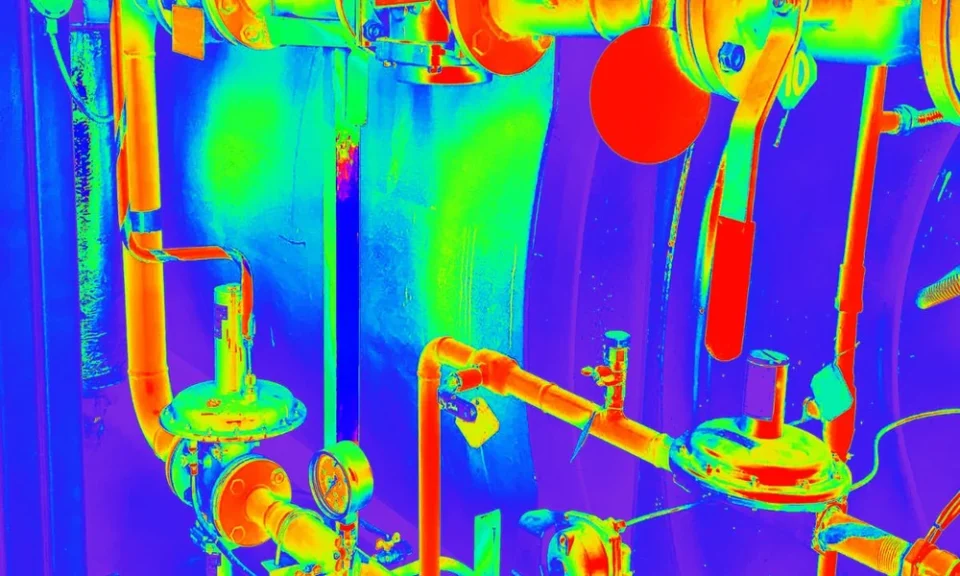
A thermal image can help direct attention to a temperature pattern, but it does not by itself establish moisture inside a wall or specify the repair. Before opening or redecorating an area, ask what the image shows, what other evidence supports the interpretation and who will assess the next step. Colourful detail can be useful without being treated as a complete diagnosis.
Ask what the colours actually represent
The apparent precision of a thermal picture can make it feel more conclusive than an ordinary photograph. Yet the relevant question is what the device is measuring and how that information is being interpreted. FLIR explains that thermal cameras detect temperature differences rather than directly seeing moisture, and that a pattern suggesting moisture requires confirmation. That distinction should remain attached to any image used in a repair conversation.
A homeowner can ask the person presenting the image to explain their conclusion in plain language. Are they identifying an area for further checking, or reporting a finding supported by other applicable evidence? What remains uncertain? The answer should not depend on the homeowner being impressed by the palette. A restrained interpretation can be more useful than an emphatic claim that exceeds what the image establishes.
Do not infer a problem’s age, severity or full extent from a screenshot alone. Those are additional questions requiring appropriate assessment. Likewise, a visually unremarkable image should not be treated as proof that no concern exists anywhere in the assembly. The device is one source of information used in context. Its limitations matter both when the picture looks dramatic and when it appears reassuring.
Keep the ordinary photograph beside the thermal view
Context makes an image usable. Identify the room and the part of the wall shown, and retain an ordinary reference photograph where safe and appropriate. Include the date and who produced the image. Without those basics, several similar corners can become difficult to distinguish, especially when the image is forwarded to a contractor who has never visited the property.
Keep relevant notes from the person taking the image with it. The aim is to preserve their account of the conditions and purpose, not to reconstruct technical settings from memory. If the image is being used in a professional report, retain the report rather than extracting one striking picture and losing its qualifications. A cropped image circulating on its own can acquire a certainty its original author never intended.
For a homeowner discussing cosmetic damage, ordinary details may be equally important: a known plumbing event, a visible stain and the timing of previous repairs. Present those as observations and documented events. Do not alter or remove material to improve the photograph without appropriate advice. The repair conversation should begin with an accurate account of what is known, not an improvised investigation hidden behind a tidy image.
Decide whether renting the tool answers your question
Before renting a camera, state what decision you hope to make with it. If the question is whether a wall can be closed, whether materials should be removed or whether a property is safe, a device rental alone does not supply the necessary professional judgment. A qualified assessment may be the more appropriate purchase. The owner should not pay for an image while assuming that interpretation and repair authorization are automatically included.
Drying Equipment’s infrared-camera rental page provides a Toronto equipment option to review when the tool fits an appropriate plan. Confirm the supplied model, instructions and what support is actually offered. Ask the intended operator whether the equipment meets the task’s needs. A familiar category name does not establish that an inexperienced user can make every assessment they have seen performed in an online demonstration.
Consider the whole assignment. Someone needs to operate the device correctly, document its context and decide what additional evidence is appropriate. If those roles are already covered by a qualified contractor, the rental may be one component of their work. If they are not covered, acquiring the device does not resolve the gap. The useful purchasing decision concerns access to a reliable answer, not ownership of a colourful file.
Follow the equipment instructions and stay within safe access boundaries. Do not open assemblies, approach electrical hazards or disturb suspected hazardous materials to obtain a clearer image. Those actions involve questions beyond a camera’s capabilities. When the property presents an immediate concern, obtain the appropriate help first rather than delaying a response to experiment with a new tool.
Let repair scope follow confirmed findings
A repair proposal should explain the established problem, the proposed work and any remaining uncertainty. Ask how the thermal information contributed to that proposal and what corroboration was used where needed. The homeowner does not need to prescribe the contractor’s investigation method to request a coherent explanation. The point is to connect the observation with the work being recommended.
If an image identifies only an area for follow-up, keep the next step proportionate to that finding. Let qualified people determine what further assessment is appropriate before accepting an extensive repair scope. Similarly, do not rush to paint over a mark because one image appears normal. Decoration should follow the applicable assessment of the underlying issue, with the relevant findings documented.
Save the final explanation with the images so the record remains understandable later. The value of thermal imaging lies partly in knowing what it can contribute and where another form of evidence is needed. A modest conclusion that directs a careful follow-up can protect both the wall and the repair budget. The most useful picture is the one interpreted within its limits, before anyone turns a temperature pattern into a demolition instruction.
