
EXCLUSIVE EXPERT CONTRIBUTION / DUBAI, UAE
Expert commentary from SnapFixNow FMC • Engineering-led property maintenance
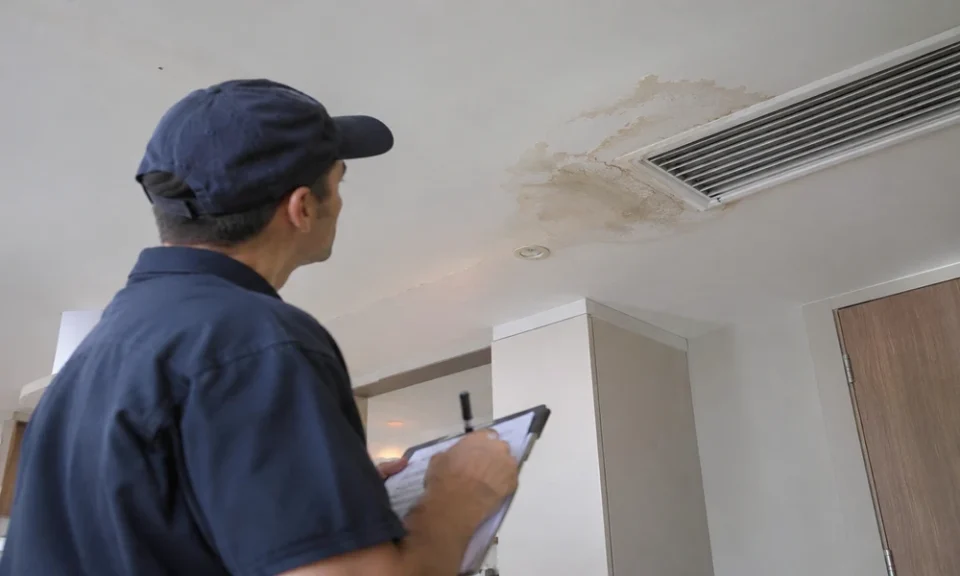
A fresh coat of paint can make a water-stained ceiling look repaired. It cannot establish that the leak has stopped. When a stain reappears weeks later, the problem is rarely the paint itself. The real failure is often the absence of a diagnosis that separates the symptom from the source.
In cooled buildings, water can travel horizontally along a slab, pipe, cable tray or false-ceiling framing before becoming visible. The wet patch may be several metres from the actual failure. That is why treating the stain as the repair location is a poor starting assumption.
First, separate four competing causes
Pressurised plumbing. A supply pipe, fitting or valve may leak whenever the line is pressurised. An unexplained meter movement, falling pressure or dampness unrelated to AC use can help technicians narrow the investigation. Isolation and pressure testing should be performed by qualified personnel, not by occupants.
Wastewater and drainage. Bathroom leaks, defective shower seals, drain traps and condensate discharge problems can produce intermittent staining. The timing may follow occupancy or fixture use rather than weather. A careful sequence of controlled water tests can be more useful than opening a large area of ceiling immediately.
Air-conditioning condensate. AC equipment removes moisture from the air. A blocked drain, cracked tray, incorrectly sloped pipe or damaged insulation can allow that water to escape. If the stain appears after long cooling cycles, the condensate route becomes a leading possibility, but not a confirmed diagnosis. For recurring FCU and drain-related faults, owners can refer to HVAC maintenance guidance when defining the inspection scope.
Building-envelope ingress. Roof membranes, façade joints, balcony thresholds and window interfaces can admit water during rain or external washing. The fact that a leak appears after a storm is useful evidence, but the full water path still needs to be traced.
Build a leak chronology before dismantling anything
Ask three questions: When was the moisture first seen? What equipment or fixture was operating? What changed in the preceding 24 hours? Add photographs showing the same angle over time, room temperatures and humidity where possible, and notes on water-meter readings or affected circuits. A simple timeline often eliminates speculative explanations.
A qualified assessor can then use non-destructive methods, such as moisture mapping, thermography interpreted alongside site conditions, and targeted system tests, to identify where intrusive access is justified. Thermal images indicate temperature differences; they do not, on their own, prove that water is present or show its source.
Treat reinstatement as a separate decision
Finding the leak is not the end of the job. The affected ceiling may contain wet insulation, corroded supports, damaged electrical accessories or moisture-sensitive joinery. Repairing a pipe and immediately closing the ceiling can trap moisture behind a beautiful finish.
A defensible closeout sequence is to make the area safe, stop the source, document the affected materials, verify drying or replace materials that cannot be recovered, inspect adjacent services and only then reinstate the finish. The US Environmental Protection Agency advises fixing moisture problems quickly and drying wet materials as soon as possible, ideally within 24-48 hours.
Why documentation matters beyond the repair
Before-and-after photos, material inventories, test results, approvals and final condition records can support maintenance reviews, landlord discussions and, where relevant, insurance evaluation. They also protect the next technician from repeating the investigation without a history. For complex damage investigations, a documented technical assessment may also inform technical insurance-claim support and subsequent reinstatement decisions.
For a landlord or property manager, the most valuable report is not one that says “ceiling repaired.” It is one that states the suspected cause, how it was tested, what was confirmed, what work was completed, what remains uncertain and whether the affected area is safe to close.
The broader lesson is simple: water damage is a systems problem before it is a decorating problem. Owners who diagnose plumbing, cooling, drainage and the building envelope together spend less time repainting the same ceiling.
A Dubai apartment test case: when the stain follows the cooling cycle
Imagine a discoloured patch forming below the FCU of an upstairs apartment in a Dubai residential tower. It becomes more noticeable after long summer cooling hours, but not after a shower. That pattern makes condensate drainage worth examining; it does not prove the cause. An engineer should check the condensate tray, drain route, insulation and adjacent chilled-water or refrigerant services, while also testing plumbing and roof or façade ingress where the evidence points. Dubai Building Code specifically addresses condensate collection, drainage and stagnant-water prevention. The standard is a useful design reference, not a substitute for investigating the installed system.
What a useful leak report should contain
A defensible report should separate observation from inference: (1) incident timeline and photographic locations; (2) assets and zones examined; (3) tests conducted and their limitations; (4) likely cause, confirmed cause or unresolved alternatives; (5) immediate safety measures; and (6) reinstatement scope, including drying verification. If access has been refused or a leak cannot be replicated, that uncertainty belongs in the report. For insurer or landlord correspondence, the condition before opening the ceiling can be as important as the repaired finish.
The repair-versus-reinstatement decision
A wet ceiling does not automatically require wholesale replacement, but painting should not be the first intervention. Check whether boards, insulation, timber, fittings or electrical components have been affected. Isolate electrical hazards through a qualified professional; do not open contaminated or unstable ceilings without suitable controls. Reinstatement starts only after the source has been addressed and the affected materials assessed. The owner should receive photos of the exposed defect and a closeout record that explains why the repaired area can safely be enclosed.
Quick answers for Dubai property owners
Can a ceiling leak be caused by air conditioning even when no pipe has burst?
Yes. A blocked or poorly routed condensate drain, an overflowing tray or condensation on inadequately insulated cold surfaces can produce water without a pressurised-pipe burst.
Does a thermal camera identify the leak source?
No. Thermal imaging can indicate temperature patterns or possible moisture-related anomalies, but readings require interpretation and usually further testing.
Should I repaint the stain immediately?
Only after the moisture source is investigated, necessary drying or material replacement is completed, and the area is suitable for finishing.
About the expert
SnapFixNow FMC provides engineering-led building maintenance, HVAC services and asset-based preventive maintenance for properties in Dubai and the Northern Emirates. For a technical overview, see technical property-damage documentation: https://www.snapfixnow.com/insurance-claim-support/.
