
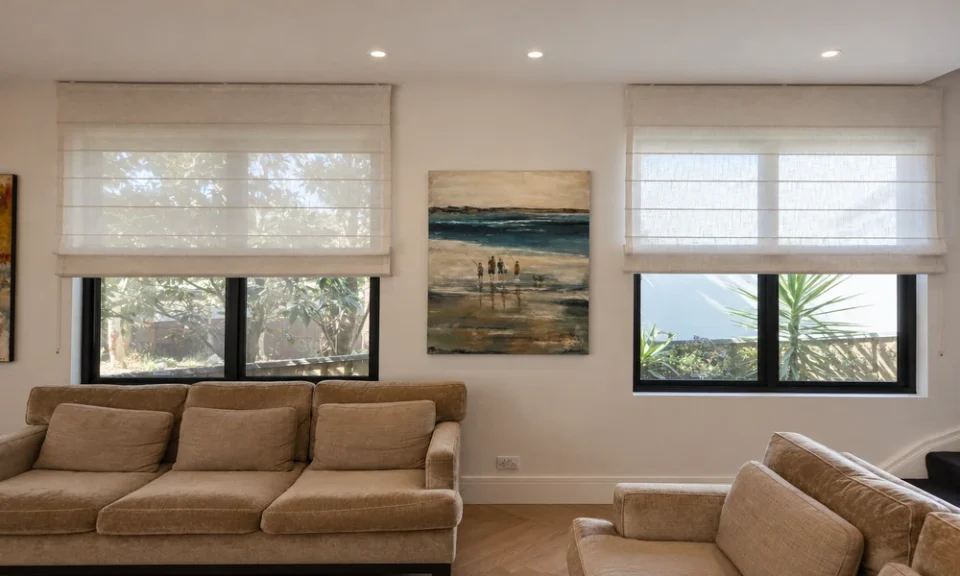
Yes, and arguably more than they have been in years. With interiors moving toward linen, texture and softer rooms, Roman blinds have become a go-to for designers who want fabric at the window without the bulk of curtains.
But they are also one of the easiest window coverings to get wrong. The fold style, the lining, where the stack sits and whether the blind goes inside or outside the frame all change how it looks and how well it works.
The tips below cover the mistakes installers see most often when they measure and fit roman blinds in Sydney every week, in everything from Paddington terraces to new apartments on the North Shore.
The short version: a Roman blind only looks right when it’s made for that exact window. Sydney supplier Roma Blinds, which has fitted made-to-measure window furnishings for more than 10 years, makes every blind to the window’s measurements rather than cutting down a standard size.
1. Pick the fold style for the house, not the trend
There are two main looks. A classic Roman has soft folds that hang slightly even when lowered, which suits older homes with timber sashes and decorative architraves. A flat Roman has crisp, even folds and a smooth panel when down, which suits modern homes and apartments.
A simple test: look at the window frame. Ornate frames suit classic folds. Square, plain frames suit flat folds.
2. Inside or outside the frame?
This is the question homeowners ask most.
- Inside the recess shows off the frame and looks built in, but it needs enough depth for the mechanism and leaves thin light gaps at the sides.
- Outside the recess overlaps the frame, so it blocks more light at the edges. That makes it the better choice for bedrooms.
Fitting outside and slightly above the frame also helps with the biggest complaint about Roman blinds: the stack.
3. Plan for the stack
When a Roman blind is raised, the fabric gathers into folds at the top. Even fully open, that stack covers part of the glass. On a tall window it barely matters. On a short window, it can block a noticeable band of view and light.
Mounting the blind higher than the frame lets the stack sit on the wall instead of the glass. This is the most common fix installers recommend, and the one most people don’t think about until the blind is up.
4. Choose the lining for the room
Fabric sets the look, but lining sets how the blind performs.
| Room | Lining | Why |
|---|---|---|
| Bedroom, nursery | Blockout | Keeps the room dark for sleep |
| Living, dining | Light filtering | Soft daylight, daytime privacy |
| Sunny west-facing room | Blockout or thermal | Cuts heat and glare |
Lining also helps with temperature. According to the Australian Government’s YourHome guide, up to 87% of a home’s heat gain in summer and up to 40% of its heat loss in winter happens through windows. A lined Roman blind sits close to the glass and helps on both counts.
5. The honest downsides
Roman blinds aren’t perfect for every window. They are harder to clean than a roller blind, the stack reduces your view, and they aren’t the best choice above a kitchen sink or in a steamy bathroom. For very wide windows or sliding doors, several narrower blinds side by side usually work better than one large one.
6. Think about how you’ll use them
For tall or hard-to-reach windows, motorisation is worth asking about. It also removes cords, which matters in homes with young children. For everyday windows, a chain or cordless system is fine.
The bottom line
Roman blinds suit Australian homes that want warmth and texture without heavy curtains. Choose the fold style to match the house, mount high enough to keep the stack off the glass, pick the lining for the room, and have them made to measure. Get those four things right and they’ll look tailored for years.