
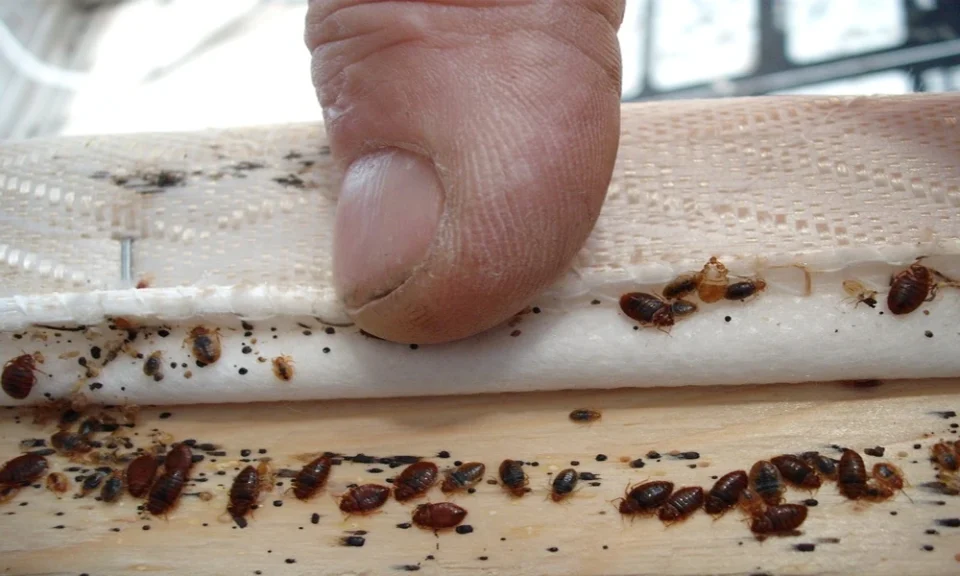
An electrical extermination system kills bed bugs with controlled, electrically generated heat rather than pesticides. Equipment like Hot Bugz raises the air and surface temperature of a room until every life stage, including eggs buried inside a mattress seam or a wall void, passes its lethal threshold. There is no residue, no evacuation period measured in days, and no chemistry for the insects to develop resistance against. One properly executed treatment can end an infestation that survived three rounds of spraying.
What is an electrical extermination system for bed bugs?
It is a set of electric heaters, high-volume fans, and wireless temperature sensors used to turn a room into a controlled oven. The heaters run on standard building power or a portable generator, the fans push hot air into the cold pockets where bed bugs hide, and the sensors report real-time readings from the hardest spots to heat so the operator knows when the job is actually finished.
The word “electrical” matters here. These are resistive electric heaters, not propane burners, which means no combustion byproducts and no open flame inside a bedroom. It also distinguishes real thermal remediation from the electronic gadgets sold online as plug-in bug repellers. The EPA has repeatedly warned that ultrasonic and electromagnetic pest devices are sold without credible efficacy data behind their claims. Heat, by contrast, has a documented kill curve.
What temperature kills bed bugs, and how long does it take?
Bed bugs begin dying at roughly 113°F (45°C), but only with sustained exposure. Research published in the Journal of Economic Entomology by Kells and Goblirsch found that all mobile stages died after about 90 minutes at 113°F, while 118°F (48°C) killed adults in around 20 minutes and eggs in roughly 90 minutes.
Eggs are the reason short bursts fail. A steamer passed over a couch seam might scald the adults it touches, yet eggs a quarter inch deeper survive and hatch six to ten days later, which is why people so often believe an infestation returned when it never left. Professional heat work therefore targets ambient air somewhere between 125°F and 140°F and holds it for several hours, giving the coldest interior of a mattress, a stack of books, or a hollow bed frame enough time to catch up with the room.
Why do chemical treatments keep failing?
Because a large share of bed bug populations in North America are now resistant to the pyrethroid insecticides most commonly used against them. Resistance has been documented in field populations for close to two decades, driven by both nerve-receptor mutations and enhanced detoxifying enzymes in the insects’ cuticle.
There is a behavioral problem too. Bed bugs spend the great majority of their lives hidden, feeding perhaps once a week, and adults can survive months without a blood meal under cool conditions. A residual spray depends on the insect walking across the treated surface at the right moment, which is a lot to ask of an animal that lives inside a box spring. Heat does not wait for the insect to cooperate. It reaches wherever the air reaches.
How does a Hot Bugz treatment run from start to finish?
A typical single-unit job takes six to ten hours on site, and the sequence looks like this:
- Sensitive items are removed first: aerosol cans, candles, wax, vinyl records, medications, live plants, pets, oil paintings, and instruments with glued joints.
- Heaters and fans are positioned, and sensors are placed at the coldest points, often inside the mattress, behind headboards, in wall voids, and under heavy furniture.
- The room climbs to target temperature over one to three hours depending on square footage, insulation, and outside weather.
- Temperature is held and monitored while a technician disturbs cold spots, moves furniture, and redirects airflow.
- The space cools, and the technician inspects for kill confirmation and inspects adjacent rooms.
Power is the constraint people underestimate. A 1,500-watt heater fills a 15-amp household circuit on its own, so serious systems draw on 240-volt service, multiple dedicated circuits, or an outside generator. An operator who plugs everything into one bedroom outlet will trip breakers and never reach lethal temperature.
What does electric heat treatment cost compared to spraying?
Expect roughly $500 to $1,500 for a single room and $1,200 to $4,000 for a whole home in 2026, with price driven by square footage, access, and clutter volume. Chemical programs often quote less per visit but require two to four visits spread across four to six weeks, and the totals converge more often than homeowners expect once follow-ups and repeat failures are counted.
The real economics sit in the timeline. Heat is a same-day resolution for the treated space, which matters enormously for hotels, short-term rentals, student housing, and landlords who lose revenue for every night a unit sits empty.
What are the limits of heat, and how are they managed?
Heat kills what is inside the treated envelope and nothing outside it. Bugs that migrate into a neighboring apartment through a shared wall will come back, so multi-unit buildings need inspection of adjoining units and often a residual barrier at the perimeter. Heat also offers no lasting protection, since a resident who brings home an infested chair the following week starts over.
That is why experienced operators pair thermal work with mattress encasements, interceptor traps under bed legs, and follow-up inspection at two and four weeks. Treat heat as the tool that eliminates the current population, not as a permanent shield.
Bed bugs have outrun most of the chemistry aimed at them, but they have not evolved past physics. A monitored electric heat treatment reaches the eggs, resolves in a day, and leaves nothing behind on surfaces where people sleep. If you are weighing another round of spray against a single decisive treatment, request a temperature-monitored heat assessment from a Hot Bugz operator and ask to see the sensor data from the job.
