
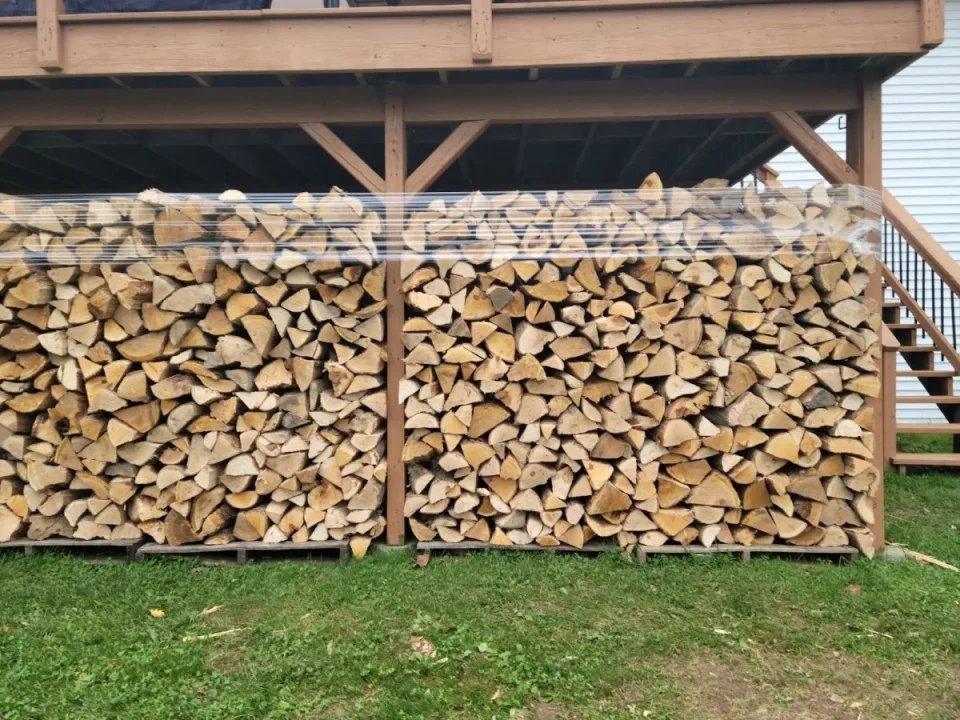
For many UK homeowners, the dream of a roaring log fire is often met with the practical nightmare of where to put the fuel. While a purpose-built wooden shed or a bespoke log store is the gold standard, not every garden has the footprint or the budget for one.
The goal of storing firewood is simple: you must keep the rain off while allowing the wind in. If you trap moisture, your quality loose hardwood logs will rot. if you leave them open to the elements, they will never stay dry enough to burn efficiently.
Here is how to store your firewood outdoors while maintaining its quality, even without a permanent structure.
Why Proper Firewood Storage Matters
Before looking at storage methods, it is important to understand why correct storage is so important.
Firewood needs:
- Good airflow
- Protection from rain
- Elevation off the ground
- Exposure to sunlight where possible
If logs sit directly on soil or grass, they absorb moisture. If they are covered incorrectly, condensation can build up and cause rot. Poorly stored wood burns inefficiently, produces more smoke and can cause tar build up in your chimney.
Seasoned hardwood should ideally have a moisture content below 20 percent. Proper outdoor stacking helps maintain this.
Use a Raised Log Stack
One of the simplest ways to store firewood without a shed is by creating a raised stack.
How to do it properly
- Lay wooden pallets, pressure treated timber, or bricks on the ground
- Stack logs bark side up where possible
- Leave small gaps between rows to allow airflow
- Position the stack in a sunny, well ventilated area
Raising the logs off the ground prevents moisture absorption and encourages air circulation underneath. This is especially important in the UK, where ground moisture remains high for much of the year.
For extra stability, stack logs in a criss cross pattern at each end.
Cover the Top, Not the Sides
One of the most common mistakes is wrapping the entire log pile in a tarp. This traps moisture and prevents airflow.
Instead:
- Cover only the top of the stack
- Leave the sides open
- Use a waterproof sheet, old roofing felt, or corrugated metal
- Secure it so wind cannot lift it
This keeps rain off while allowing air to circulate freely through the logs.
Store Against a South Facing Wall
If you do not have space for a freestanding stack, use an exterior wall.
A south or west facing wall works best as it receives more sunlight. The warmth helps dry the wood naturally.
Important tips:
- Leave a small gap between the logs and the wall
- Avoid stacking directly against timber cladding
- Ensure the wall area is well ventilated
This method works particularly well in compact UK gardens where space is limited.
Use a Simple Log Rack
A log rack is an affordable alternative to a full shed. These can be metal or timber and are widely available.
Benefits include:
- Built in elevation from the ground
- Better airflow
- Neater appearance
- Easier access during winter
You can also build a simple DIY rack using treated timber and screws.
If you are storing kiln dried logs, keeping them elevated and loosely covered will maintain their low moisture content for longer.
Temporary Storage for Winter Use
If you are bringing logs home during colder months, you can use short term storage solutions such as:
- A ventilated crate
- A heavy duty garden storage box with airflow holes
- An open front lean to made from spare timber
Avoid storing large volumes of logs indoors for extended periods, as this can introduce insects into the home.
For more detailed guidance on preparing logs for efficient burning, it is worth reviewing advice from organisations such as HETAS, which provides safety standards for solid fuel use in the UK.
Common Mistakes to Avoid
- Stacking logs directly on soil or grass
- Wrapping the entire stack in plastic
- Storing in permanently shaded areas
- Keeping wood in sealed plastic containers
- Storing unseasoned wood without airflow
If you are unsure whether your logs are ready to burn, look for cracks at the ends and a lighter weight compared to freshly cut timber.
Final Thoughts
You do not need a dedicated log shed to store firewood properly. With careful stacking, elevation, and smart covering, you can protect your logs from the unpredictable British weather.
The key principles are simple:
By following these steps, your firewood will stay dry, efficient, and ready to burn throughout the colder months.
