
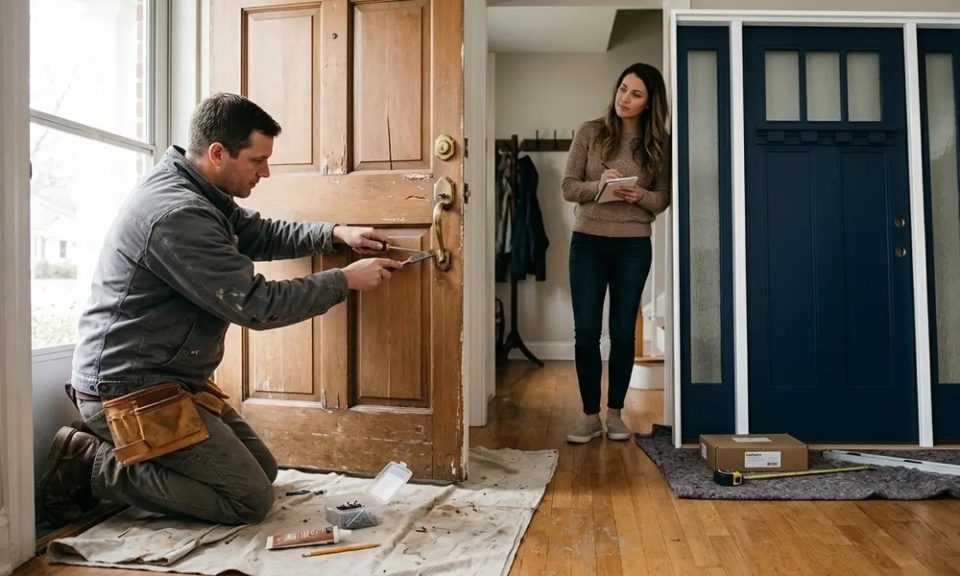
There is a shift happening in home maintenance, and it is not particularly glamorous.
People are keeping things going.
Not bodging them forever. Not ignoring problems completely. Just taking a harder look at repair before jumping straight to replacement. You see it with boilers, appliances, fencing, roofs, and now very clearly with doors. Especially patio doors, bifolds and older UPVC systems.
A door that drags, sticks or refuses to lock properly no longer automatically means “rip it out”. More homeowners are asking whether UPVC door repairs can buy them another few useful years instead.
Often, they can.
Sometimes they cannot.
That is the honest version.
But the repair-first mindset has definitely become stronger, and it is easy to understand why. Replacement prices have climbed. Household budgets are tighter. People are more cautious about spending thousands on something that might only need a new mechanism, roller set or proper alignment.
A few years ago, plenty of homeowners would have replaced a tired patio door simply because it felt old.
Now they are asking better questions.
Replacement Has Started to Feel Excessive
Replacing doors used to be treated as the clean option.
Old UPVC door sticking? Replace it.
Patio door dragging? Replace it.
Bifold doors awkward to close? Get a quote for a new system.
That thinking suited companies selling new doors, obviously. But from a homeowner’s point of view, it often meant spending far more than necessary.
A lot of mechanical door faults are not failures of the whole door. They are failures of moving parts.
Rollers wear down.
Locks drift out of alignment.
Gearboxes fail.
Keeps move slightly.
Hinges sag.
Tracks get damaged or clogged.
None of that automatically means the frame, glass and entire door system are finished.
That distinction matters now because people are watching money more carefully. A full replacement can mean not just the door cost, but installation, finishing, plaster touch-ups, trims, disruption and sometimes unexpected extra work once the old unit comes out.
Repair feels more sensible when the door itself still has life in it.
And quite often, it does.
The Cost of Home Improvements Has Changed Behaviour
There is no mystery here.
People are more hesitant about big domestic spending than they were a few years ago.
Mortgage payments, energy bills, food, insurance, council tax, everything seems to have eaten into the money homeowners might previously have used for home upgrades. The idea of spending several thousand pounds on new doors is less casual now.
That does not mean people are neglecting their homes.
If anything, many are becoming more practical.
They are asking whether the problem can be diagnosed properly rather than assuming replacement is inevitable. That is a healthier approach in many ways.
A stiff patio door might only need new rollers and track attention.
A UPVC front door that will not lock smoothly might need adjustment or mechanism work.
A bifold system that has dropped may need careful realignment rather than full removal.
There is a lot of grey area between “perfect” and “scrap it”.
That grey area is where repair work sits.
A Lot of Doors Are Mechanically Tired, Not Finished
This is the part homeowners often miss.
A door can feel terrible and still be repairable.
You can have a sliding patio door that barely moves, yet the frame and glass are perfectly usable. The rollers underneath may be destroyed, the track may be filthy, and the locking system may be under strain, but that does not always mean the whole door has reached the end.
Same with bifolds.
A dropped bifold panel can make the entire system feel broken. The handle resists. The panels catch. The door refuses to fold cleanly. It feels dramatic because one part of the system affects everything else.
But many bifold faults come down to alignment, running gear and adjustment.
Not always simple.
Not always cheap.
Still very different from full replacement.
Older UPVC doors are similar. People often assume the complete door needs changing when the internal gearbox or locking strip is the real issue. Sometimes a failed mechanism makes the handle flop uselessly or prevents the door from locking at all.
It feels catastrophic.
Mechanically, it may be a parts-and-labour job.
Repair Makes Sense When the Door Was Good Quality Originally
Not all doors deserve saving.
That sounds harsh, but it is true.
Some were cheap when fitted, badly installed, poorly supported or already warped beyond sensible repair. Some have frames twisted so badly that any repair becomes temporary at best. Some have obsolete parts that are nearly impossible to source without spending silly money.
There is a point where replacement is the better advice.
But plenty of older door systems were made well enough to justify repair. In fact, some older patio doors and UPVC systems are sturdier than newer budget replacements.
This is something people do not always expect.
A twenty-year-old sliding patio door with decent original hardware may be worth repairing if the structure is sound. A five-year-old bargain installation might be less promising if the frame has moved, the hardware is poor and the fitting was rough from day one.
Age alone does not tell the story.
Condition does.
Installation quality does.
Parts availability does.
How the door has been treated also matters, though nobody likes hearing that bit.
The Rise of the “Can You Just Look at It First?” Homeowner
This is one of the more positive changes.
People are asking for diagnosis before making decisions.
That did not always happen. Plenty used to phone door companies asking for replacement quotes without knowing what had actually failed. Now more homeowners want someone to inspect the issue first and give them a realistic view.
Can it be repaired?
Is it worth repairing?
Will the fix last?
Are parts available?
Is replacement likely within a year anyway?
Those are better questions.
They also lead to better outcomes. A contractor who only sells replacement doors has an obvious incentive. A repair specialist looks at the mechanical fault differently. Not always more cheaply, but usually more specifically.
With patio door repair services, for example, the answer might be rollers, track adjustment, alignment work and lock servicing. Not a full new set of doors.
That kind of targeted repair can be the difference between a manageable bill and a major home improvement spend.
Patio Doors Are the Classic Repair-First Candidate
Sliding patio doors are probably the best example of this whole shift.
They often become difficult gradually.
First, the door feels a little heavier. Then it starts rumbling along the track. Then the handle becomes awkward. Then someone in the house discovers the “knack” for opening it.
Every family has one person who knows the knack.
Lift slightly.
Pull towards yourself.
Push down on the handle.
Do not open it too far.
Ridiculous really.
But common.
The mechanical issues behind this are often fixable if caught before major damage occurs. Rollers wear. Tracks collect debris. Door weight stops being carried correctly. Locks fall out of alignment because the door no longer sits where it should.
Leave it long enough and the damage spreads.
That is where people get caught out. The door still opens, so they delay. But continuing to drag a heavy panel over failing rollers can damage tracks and strain mechanisms.
Repair early, and it is usually less painful.
Wait until the door is almost unusable, and the job becomes more involved.
Bifold Doors Are Complicating the Conversation
Bifold doors are a different beast.
They were sold as premium lifestyle features, and many homeowners still associate them with high-end renovation. That can make people nervous when faults appear. They assume any repair will be expensive because the system looks complex.
Sometimes it is.
Often it is not as bad as feared.
The common bifold issues are familiar now: dropped panels, dirty tracks, worn rollers, misaligned locks, stiff handles, panels catching near the bottom, doors that fold awkwardly or refuse to sit flush.
Because bifold systems rely on multiple panels working together, one small problem can make the whole setup feel faulty.
This is where good diagnosis matters.
A homeowner may think the lock has failed, when really the door has dropped and the locking points no longer line up. They may think the rollers are ruined, when adjustment and track cleaning might improve things significantly.
Or the rollers may indeed be ruined.
That happens too.
The point is that guessing is expensive. Proper inspection usually gives a clearer route than assuming replacement.
For many homes with large rear extensions, bifold door repairs are becoming part of normal maintenance rather than a sign that the doors were a bad investment.
Weather Is Pushing More People Towards Repair
The British weather keeps exposing weak door systems.
Wet periods affect patio tracks and drainage.
Cold weather makes stiff locks more obvious.
Warm spells can expand frames and tighten already narrow tolerances.
Wind-driven rain finds poor seals.
Condensation highlights gaps people had ignored all summer.
In West Yorkshire, the combination of older housing stock, damp winters and newer extension trends creates plenty of door repair work. A door might behave reasonably well for most of the year, then suddenly become awkward when the weather shifts.
That sudden change can make homeowners think something has broken overnight.
Usually it has been deteriorating quietly for months.
The weather just exposed it.
This is particularly noticeable with doors that face open gardens, exposed patios or colder rear elevations. Dirt, water and temperature changes all work against moving parts. Not dramatically. Slowly.
And slow damage is easy to ignore.
Repair Is Also Less Disruptive
This gets overlooked.
Replacing doors is not just expensive. It is disruptive.
Measurements. Quotes. Waiting for manufacture. Removal. Installation. Making good. Possibly redecorating. Maybe dealing with plaster edges, flooring trims or disturbed tiles around the frame.
With repair, the disruption is usually much lower.
Not always a tiny job, but it often avoids turning the back of the house into a building site.
For landlords, this matters even more. A tenant with a patio door that will not lock needs a fast practical solution. Replacing the whole system may be unnecessary and slow. A repair may restore security and function without the property being unsettled for days.
For homeowners, it is partly convenience.
People do not always want another project. Sometimes they just want the door to shut properly again.
A very reasonable ambition.
Sustainability Plays a Small Part Too
It would be false to pretend everyone is repairing doors because of environmental ideals.
Most are doing it because of cost.
Still, waste matters.
Throwing away an entire door system because a mechanism has failed is not always sensible. Glass, frames, hardware, trims, packaging, transport, disposal. Replacement carries a material cost beyond the invoice.
Repairing what is already there can be the more responsible option when the door is structurally sound.
This attitude is becoming more common across home maintenance generally. People are more aware of waste now, but they are also tired of products being treated as disposable.
Doors should not be disposable after a relatively minor mechanical fault.
Good ones certainly should not be.
The Door Industry Has Not Always Helped
Here is the blunt bit.
Some homeowners have been pushed towards replacement too quickly.
Not always maliciously. Sometimes because the person quoting does not specialise in repair. Sometimes because companies are set up to sell new doors, not diagnose old ones. Sometimes because repair work is fiddly and less profitable than installing new units.
But the result is the same: people are told a door “cannot be repaired” when what that really means is “we do not repair it”.
Those are different things.
A specialist may still decide replacement is the right route. But the answer should come after proper assessment, not because repair is inconvenient.
Mechanism repairs can be awkward. Parts can be annoying to source. Old systems can be frustrating. Doors fitted badly years ago can test anyone’s patience.
Still, many can be repaired.
The homeowner deserves that option explained honestly.
Same-Day Repairs Reflect the New Reality
Same-day repair demand has grown because people are leaving faults longer, then needing fast help when they finally fail.
That sounds contradictory, but it is exactly how it tends to happen.
A door drags for months.
The handle feels stiff for weeks.
The lock catches occasionally.
Then one evening it will not secure at all.
Suddenly it is urgent.
That is when people look for same-day repairs instead of replacement quotes. They need the house secure. They need the door usable. They do not have time to wait weeks for a new unit.
This pattern is especially common with UPVC door mechanisms. A failing gearbox or multipoint lock can give warning signs for ages before finally giving up. The handle gets heavy. The key becomes awkward. The door needs lifting slightly.
Then it stops.
That is the moment repair becomes not just sensible but necessary.
Repairs Still Need to Be Done Properly
Repair-first does not mean cheap-at-all-costs.
That distinction matters.
A poor repair can make future work harder. Incorrect adjustments can damage locking points. Wrong parts can strain mechanisms. Excessive lubricant can attract dirt. Forcing old screws or keeps into the wrong position can distort frames.
There is a difference between preserving a door and bodging it along.
A good repair should restore function, reduce strain and give the homeowner a realistic sense of what to expect next. Maybe the door has another five years. Maybe it needs monitoring. Maybe the repair is worthwhile now but replacement should be budgeted later.
That honesty is valuable.
People can make sensible decisions when they are given proper information.
Replacement Still Has Its Place
Repair is not always the answer.
Badly warped frames, severe structural movement, failed sealed units, extensively damaged tracks, poor original installation, obsolete mechanisms with no practical replacement, doors that have been repeatedly bodged for years – sometimes replacement is cleaner.
Nobody should pretend every door can be saved.
That creates different problems.
But the point is not that repair always wins. The point is that repair deserves consideration before replacement becomes the default.
A door should be judged on condition, not assumption.
Some old doors are worth keeping.
Some newer ones are not.
Annoying, but true.
Homeowners Are Becoming More Practical
The most noticeable change is mindset.
People are less impressed by shiny replacement pitches than they used to be. They want to know what has failed, what it costs, how long a repair may last and whether a full replacement is genuinely needed.
That is a good thing.
It means fewer usable door systems being removed unnecessarily. It means household budgets being used more carefully. It means faults being understood instead of guessed at.
There is still a problem with delaying too long, of course. Many homeowners wait until the door is nearly unusable before asking for help. That part has not improved much.
But once they do act, more are asking for repair first.
That feels like common sense returning.
An old patio door that needs rollers is not automatically rubbish. A bifold that needs adjustment is not automatically a failed installation. A UPVC door with a faulty mechanism is not automatically ready for the skip.
Sometimes it just needs someone who knows where to look.
