
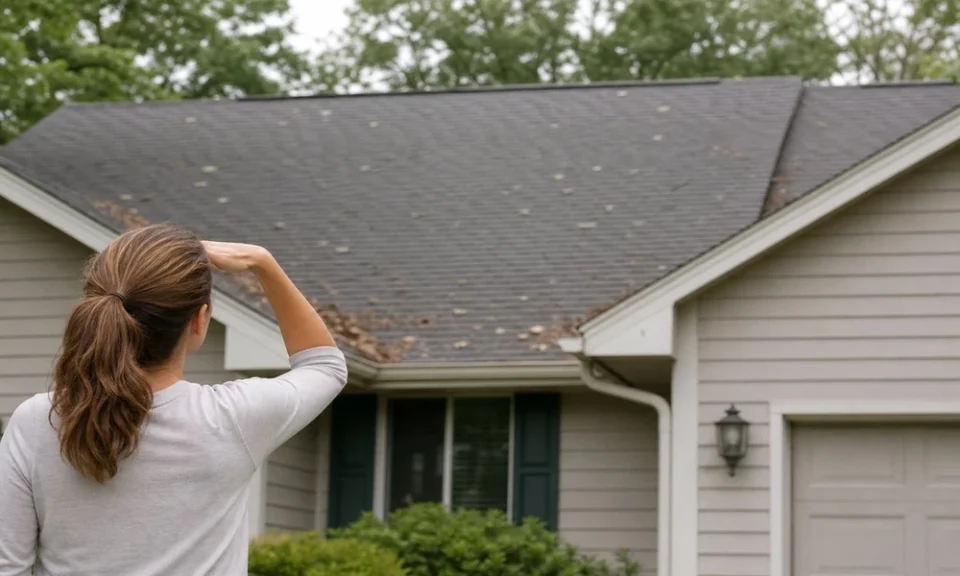
It’s easy to assume that only the outdoor elements will suffer in a hard storm over the weekend, but before the workweek begins, it’s smart to take stock of the home and see if there are any signs your roof needs repair. And before you head upstairs to climb on the roof, it’s important to know you don’t actually need to go on the roof to identify potential signs your roof needs repair. A compromised roof isn’t a good spot for an amateur assessment.
Here are some things you should look for to see if you need to contact a professional roofer.
Check Ceilings and the Attic for Indoor Warning Signs
Start at the room directly below the roof line. Is there a water stain on the ceiling? A water ring can look brown or slightly yellow, and while it’s usually a sign you’re dealing with a leak, it doesn’t always mean the leak originated directly above the stain. Water can travel across rafters, pipes, or cables before making its way into the drywall.
If the affected ceiling is a bathroom, be sure to inspect the area above the ventilation fan. What looks like a water ring can often be mistaken for condensation, but it could indicate water leaking into the roof vent area. Scan the ceiling around exterior walls, skylights, chimneys, and lighting fixtures as well.
If you have access to your attic, take a look around. Bring a flashlight and make sure you aren’t walking on anything fragile. Note if there’s any compression of insulation, damp spots on wood, a foul smell, or water on the underside of the roof boards. If the attic is damp after a storm, it might not necessarily mean there’s a leak happening, but it does warrant further inspection.
Inspect the Roof and Gutters From Ground Level
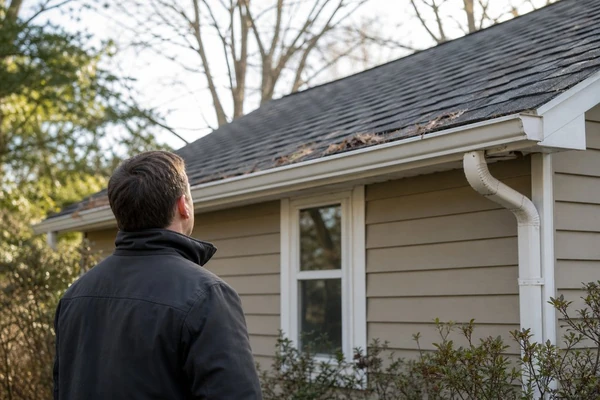
Next, take a walk around the property to see what’s happening outside. Damage may not always look like a big hole; sometimes it’s more of a subtle change you can notice when you know what to look for.
Look around for the following:
- Shingle fragments or shingle tabs caught near a downspout
- Granules, which look a bit like coarse sand, pooled in a gutter or at the bottom of a downspout
- Branches laying on top of a roof, in a gutter, or sitting on a piece of metal flashing
- Bent sections of gutter that are pulling away from the edge of a roof
- Metal components near a vent, skylight, chimney, or valley that are starting to come loose
- Shingles that are lifting, cracked, warped, or otherwise not laying flat on the roof
Some amount of granule loss in gutters is normal over time, so a couple isn’t necessarily something to worry about. However, a heavy accumulation in the wake of a storm is concerning. Granules are part of the protective layer of your shingles, protecting them from weather and UV rays, and without those granules your shingles will begin to deteriorate much sooner.
Pay Close Attention Where Roofing Materials Meet
Water tends to find its way in where different materials come together on the roof. The metal flashing used to connect pieces of roofing (there’s a decent explainer at britannica.com/technology) such as a chimney, pipe, skylight, or side wall can become bent or displaced during a strong windstorm, allowing water to seep in. Look for any signs of exposed or bent metal flashing. Check the area around a chimney to ensure the sealant hasn’t been broken by the storm and the masonry hasn’t been shifted off course.
Document the Damage and Decide What Cannot Wait
When you’ve finished your weekend inspection, take a photo of everything you found. Include a picture of the interior ceiling stain, damp insulation, any debris, damaged gutters, and shingles that were blown onto the ground. If you managed to retrieve a few of the pieces from the ground, save them in a plastic bag.
Keep a note of the date of the storm, the date you noticed the damage, and if there are active leaks happening inside the house. Having this record helps a roofing contractor evaluate the damage and see whether it’s likely recent. It can also be helpful to know how the staining developed if you suspect the stain will spread over time.
Act Quickly When the Damage Creates an Immediate Risk
Some signs your roof needs repair can be left to the professionals. If it’s a few lost granules or a cracked shingle or two, it’s not something that needs an immediate call. If there’s a little bent flashing and no sign of water intrusion, you can cover the items below and check again after the next rainfall.
However, if there’s a leak actively dripping water or a large branch has punctured the roof, you’ll want to take care of that right away. The same goes if you think the roof deck is sagging or you’ve got materials coming loose and at risk of falling. Clear items away from the leak and put a bucket under dripping water, then take photos before you begin cleaning up.
