
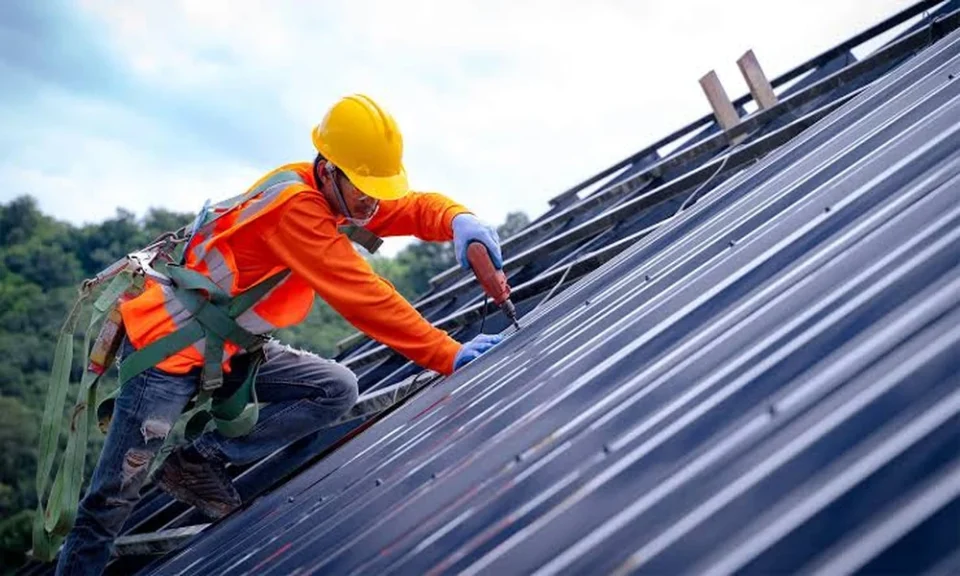
A leaking roof is inconvenient on a house. On a commercial property, it can bring an entire operation to a standstill.
Yet despite the financial impact, commercial roofing rarely receives much attention until something goes wrong. By then, the conversation is no longer about preventative maintenance or planned investment. It’s about damaged stock, disrupted operations, insurance claims and how quickly the building can be made watertight.
Across Surrey and the South East, thousands of offices, warehouses, schools, retail units and industrial buildings rely on roofs that are quietly doing their job every day. Most will continue to perform well for years. Others may already be developing issues that remain invisible until heavy rainfall exposes them.
The irony is that many of the most expensive roofing failures begin as relatively minor defects that could have been identified months earlier.
A roof is part of the business infrastructure
Commercial buildings are designed around continuity.
Power supplies are maintained.
Fire alarms are tested.
Heating and cooling systems are serviced.
Security systems are monitored.
Roofs, however, often receive attention only when someone notices a damp ceiling tile or places a bucket beneath a leak.
That approach ignores the fact that the roof protects everything underneath it.
Whether the building houses expensive machinery, office staff, medical equipment or retail stock, the roof is one of the few elements that every part of the business depends upon.
The real cost isn’t always the repair
Business owners naturally focus on the price of fixing a roof.
In reality, the repair itself is often the least expensive part of the problem.
A single leak can lead to:
- Damaged stock
- Lost production time
- Disrupted trading
- Electrical safety concerns
- Cancelled appointments
- Temporary staff relocation
- Higher insurance claims
- Damage to internal finishes
For businesses working to tight deadlines, even one day of disruption can cost significantly more than the roofing work required to prevent it.
That is why planned maintenance has become an increasingly important part of responsible facilities management.
Flat roofs demand regular attention
Many commercial buildings use flat roofing systems because they provide practical, efficient and cost-effective solutions for larger structures.
Modern flat roofs are highly reliable when properly designed and maintained, but they are not maintenance-free.
Drainage outlets can become blocked.
Protective surfaces gradually weather.
Flashings may deteriorate.
Mechanical equipment installed on roofs can create additional stress around penetrations and access routes.
None of these issues necessarily require major repairs if they are identified early.
Businesses responsible for larger buildings often benefit from professional commercial roofing inspections that identify developing issues before they affect day-to-day operations.
Summer is often the best time to inspect
Many people assume roofs should only be checked after storms.
Experienced contractors tend to take a different view.
Dry weather provides safer working conditions.
Roof surfaces are easier to inspect.
Potential defects are often more visible.
Repairs can usually be completed without delays caused by persistent rainfall.
Planning inspections during summer also gives businesses time to schedule any necessary work before autumn and winter place greater demands on the building.
Waiting until water enters the property rarely provides more options. It usually reduces them.
Thermal movement is often overlooked
Commercial roofs experience constant expansion and contraction.
Large roof areas absorb significant amounts of heat during warm weather before cooling again overnight.
Those repeated movements place gradual stress on joints, membranes, sealants and flashings.
The process is entirely normal.
The problem arises when ageing materials lose their flexibility or previous repairs begin to weaken.
Small gaps may develop slowly over several years before finally allowing water to penetrate the roof structure.
By the time staining appears inside the building, the original defect may have existed for much longer than anyone realised.
Roof access creates additional wear
Unlike domestic properties, commercial roofs often support regular maintenance activity.
Air conditioning engineers.
Solar panel installers.
Telecommunications contractors.
Cleaning companies.
Every visit introduces additional foot traffic across the roof surface.
Without suitable access routes and proper protection, repeated movement can gradually damage membranes or protective finishes.
This doesn’t mean roofs should be avoided. It simply highlights the importance of ensuring everyone accessing them understands how the roofing system is designed to perform.
Small drainage problems rarely stay small
One blocked outlet may not seem particularly serious during dry weather.
Once heavy rain arrives, the situation changes quickly.
Standing water places additional weight on flat roofs.
Overflowing outlets can force water into vulnerable areas.
Repeated ponding accelerates deterioration and shortens the lifespan of many roofing systems.
Routine cleaning and inspection often prevent these issues developing in the first place.
It is one of the simplest forms of preventative maintenance available to any commercial property owner.
Every building is different
There is no universal maintenance schedule.
A warehouse on an industrial estate has different demands from a school.
A retail park experiences different levels of roof access compared with an office building.
Older premises may require more frequent inspections than recently completed developments.
The surrounding environment also matters.
Buildings beneath mature trees often experience greater leaf accumulation.
Coastal locations face additional exposure to salt and wind.
Urban environments can experience increased pollution and debris.
Understanding how a building is used is every bit as important as understanding how it was built.
Prevention almost always costs less
There is a tendency to see roof inspections as an unnecessary expense because they do not immediately generate visible results.
In reality, the opposite is often true.
The inspection itself provides reassurance that the roof continues to perform as expected.
If defects are discovered, they can usually be addressed while they remain relatively straightforward.
Modern roofing services are increasingly focused on extending the lifespan of existing roofs through planned maintenance rather than recommending replacement at the first opportunity.
That approach benefits both property owners and occupiers by reducing disruption while protecting long-term investment.
Thinking beyond today’s weather
Commercial roofs are expected to withstand years of changing conditions.
Hot summers.
Heavy rainfall.
Strong winds.
Occasional snowfall.
Constant expansion and contraction.
The buildings themselves continue evolving too, with additional equipment, changing occupancy and new operational demands placing different pressures on the roof over time.
Treating the roof as part of a wider asset management strategy, rather than simply another maintenance issue, allows businesses to make informed decisions before problems become urgent.
For companies responsible for commercial premises across Surrey and the surrounding counties, proactive maintenance is rarely about avoiding one leak. It is about protecting business continuity, reducing long-term costs and ensuring the building continues supporting the people and operations beneath it.
Where inspections identify ageing materials or areas of concern, experienced roofing specialists can often recommend targeted repairs that extend the roof’s service life without the disruption and expense of a complete replacement. In many cases, the most valuable roofing work is the work nobody notices because it prevents the emergency from ever happening.
