
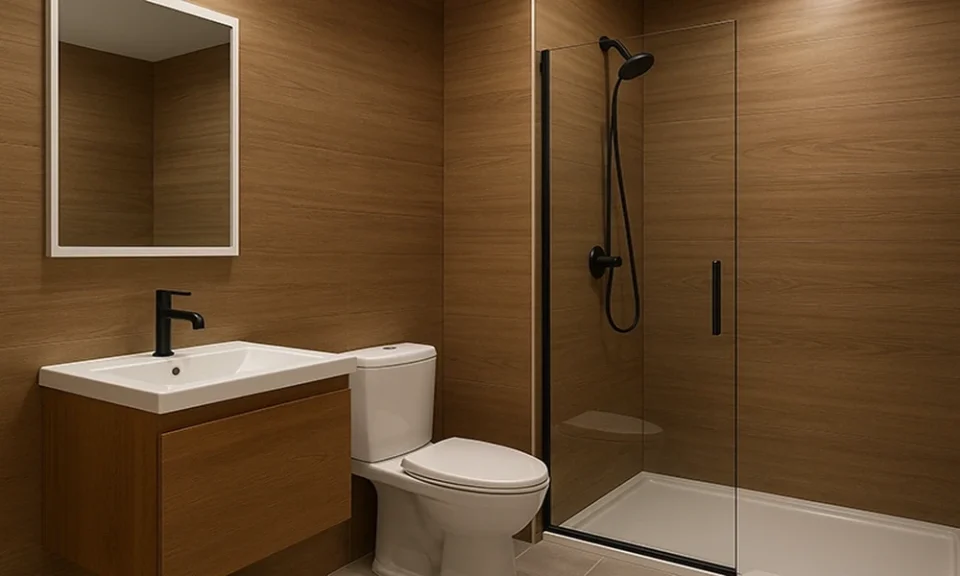
A decade ago, PVC wall panels carried a reputation problem. Builders associated them with cheap rentals and temporary fixes, the kind of surface you tolerated rather than chose. Today the picture has changed markedly. Contractors who once dismissed panels now recommend them for specific projects, and homeowners increasingly ask for them by name. The shift is worth examining, because it reveals as much about changing priorities as about the product itself.
What actually changed
Two things drove the turnaround: the product improved, and buyer priorities shifted. Early panels looked plainly artificial, with obvious seams and unconvincing patterns. Manufacturing advances closed much of that gap. Modern panels reproduce marble veining, stone texture, and concrete finishes convincingly, and large-format sheets minimize the visible joints that once gave them away.
Meanwhile, buyers grew more focused on water resistance, ease of maintenance, and installation speed. Those happen to be exactly the areas where PVC panels excel. As the priorities moved toward the panel’s strengths, the panel’s weaknesses, mainly appearance, mattered less than they used to.
The waterproofing argument
The central practical case for panels rests on water. Tile is not inherently waterproof. Its grout lines are porous, and its performance depends on a properly installed membrane behind it. Done right, tile is excellent. Done wrong, and it fails invisibly as water seeps through grout into the wall.
PVC panels are waterproof by nature. The material does not absorb water, and a continuous panel surface has far fewer seams than a tiled wall has grout lines. For a wet environment like a shower, this changes the risk profile. The PVC shower wall panels on the market create a moisture barrier from the moment they are installed, without depending as heavily on the installer’s skill with membranes and grout. For rentals and quick turnovers, that reliability carries real weight.
The labor math
Installation time is where the economics tilt. Tiling a shower is a multi-day process: prepare the substrate, waterproof it, spread mortar, set tiles level, wait, then grout and cure. Each stage has drying time and demands skill. Labor accounts for a large share of the total cost.
Panels compress that timeline dramatically. They are cut to size, adhered or fastened to a prepared wall, and sealed at the joints. A shower surround that would take a tiler several days can be paneled in a fraction of that. For contractors managing tight schedules and for homeowners paying by the hour, the reduced labor translates into meaningful savings. On a full bathroom, the difference can run into the hundreds or thousands.
Where panels still lose
An honest account has to name the trade-offs. Tile retains an edge in prestige and resale perception. A fully tiled shower still reads as the premium choice to most buyers, and the variety of tile formats, textures, and designer options far exceeds what panels offer. For a high-end primary bathroom or a home being staged for maximum resale, tile often remains the right call.
Panels are also more vulnerable to impact and heat than fired ceramic. A heavy dropped object can crack a panel, whereas tile shrugs it off. Over a very long horizon, well-maintained tile likely outlasts panels in sheer durability, provided its grout is kept up. These are genuine limitations, not marketing quibbles.
The maintenance factor
Day-to-day upkeep tilts back toward panels. Grout is the maintenance burden of any tiled surface. It is porous, it discolors, and it grows mildew if neglected, requiring periodic sealing and scrubbing. This is not a minor chore over the life of a bathroom.
A panel’s smooth, near-seamless surface wipes clean in seconds and offers mildew far fewer footholds. For busy households, aging homeowners, and landlords, the reduction in ongoing maintenance is a decisive advantage. This practical benefit, more than appearance, explains much of the panels’ rising popularity.
Who is choosing what
Patterns have emerged in how the two options get deployed. Property investors and landlords lean toward panels for their durability, low maintenance, and fast installation between tenants. Homeowners renovating secondary bathrooms, basement showers, or cottages often choose panels to control cost and effort. Budget-conscious first-time renovators favor them because the forgiving installation reduces the risk of a costly mistake.
Tile still dominates primary bathrooms in higher-end homes and any project where resale prestige is paramount. Increasingly, though, households mix the two: tile in the main bathroom, panels in the basement or guest shower. The choice has become situational rather than a matter of one being simply better.
The installation reality behind the claims
Marketing loves to call panels a simple weekend job, and compared to tiling that is largely fair. But the ease depends on doing a few things right, and understanding them separates a clean install from a disappointing one.
The substrate still matters. Panels need a flat, sound, clean surface to adhere or fasten to. On an uneven wall, panels can telegraph the bumps or fail to seal properly at the joints. In a shower, the wall behind still needs to be moisture-appropriate, even though the panels themselves are waterproof. Cutting corners on wall prep undermines the panel’s biggest advantage.
The joints are the critical detail. Where two panels meet, and where they meet the floor, ceiling, or fixtures, the seams must be sealed with the correct sealant and, often, matching trim profiles. A poorly sealed joint is the one place water can find its way behind an otherwise waterproof surface. This is the step rushed installers get wrong.
Cutting panels cleanly around a faucet, a shower valve, or a niche takes care and the right blade, since a ragged cut shows and can compromise the seal. None of this is beyond a careful DIYer, which is precisely the point. But the ease is conditional. Respect the prep, the joints, and the cuts, and panels deliver on their promise. Ignore them and even a forgiving material can disappoint.
What the shift really signals
The rise of PVC panels reflects a broader change in how people weigh renovation decisions. Reliability, maintenance, speed, and cost now compete seriously with appearance and prestige, where once looks dominated the conversation. Retailers like Home Depot and specialized suppliers alike have expanded their panel offerings in response to real demand, not just as a budget afterthought.
None of this means panels have dethroned tile. It means the two now occupy clearly defined roles, and buyers are choosing between them on the merits rather than defaulting to tile out of habit or dismissing panels out of prejudice. That is a healthier market, and a more honest one. The panel earned its place not by pretending to be tile, but by being genuinely better at the things a growing number of buyers care about most.