
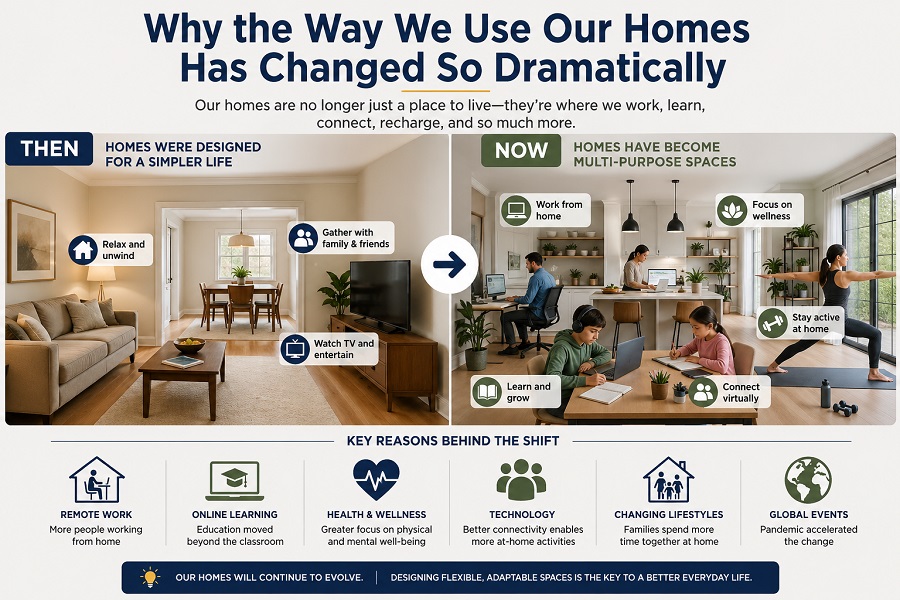
Homes are no longer just places to live. They have become workplaces, social spaces and areas for relaxation, all at once. This shift has changed how rooms are used and how people think about the layout of their homes.
In the past, rooms were clearly defined. Kitchens were separate, living rooms were distinct and dining areas were used at specific times. Today, those boundaries are far less rigid. Spaces are expected to adapt throughout the day, supporting different activities without feeling disconnected.
This evolution has had a particularly strong impact on how kitchens are designed and experienced.
From Functional Space to Social Hub
The kitchen was once a purely practical environment. Its role was to support cooking and storage, often positioned away from the main living areas. Over time, this perception has changed.
Now, the kitchen is often the centre of the home. It is where people gather, talk and spend time together. Meals are no longer the only reason to be there. Conversations happen around islands, laptops sit alongside coffee cups and the space becomes part of daily life rather than a destination.
This shift has influenced how layouts are approached, encouraging more openness and connection.
Why Separation No Longer Fits Modern Living
Traditional layouts made sense when daily routines were more predictable. Cooking happened at set times, and other activities took place elsewhere. Today, routines are more fluid.
Working from home, flexible schedules and a greater emphasis on social interaction mean that people want to stay connected while moving through different tasks. Being separated by walls can feel limiting.
Opening up spaces allows for better flow and visibility. It supports interaction without requiring everyone to be doing the same thing.
Balancing Openness With Practicality
While open spaces offer many benefits, they also present challenges. Noise, storage and zoning all need to be considered carefully. Without thoughtful planning, a space can feel cluttered or overwhelming.
The key lies in balance. Defined zones can exist within an open layout. Cooking areas, dining spaces and relaxation zones can be subtly separated through design rather than walls.
This approach allows for openness without losing functionality.
The Importance of Flow
Flow is one of the most important aspects of any interior space. It determines how easily people move through a room and how naturally different areas connect.
In open layouts, flow becomes even more critical. Pathways need to feel intuitive. Furniture placement should support movement rather than interrupt it. Sightlines should feel considered rather than accidental.
When flow is handled well, a space feels calm and organised, even when it is busy.
Light as a Defining Feature
One of the most noticeable benefits of open spaces is the way they handle light. Removing barriers allows natural light to travel further, creating a brighter and more inviting environment.
This has a direct impact on how a space feels. Bright, open areas tend to feel larger and more welcoming. They encourage people to spend time there and support a more positive atmosphere.
Artificial lighting also plays a role, helping to define different areas and create a sense of warmth in the evening.
Materials and Cohesion
In open spaces, materials need to work together. Because different areas are visible at the same time, consistency becomes important. Clashing finishes can make a space feel disjointed.
This does not mean everything has to match perfectly. Variation can add interest, but it should feel intentional. Colours, textures and finishes should complement each other rather than compete.
A cohesive approach helps tie the space together, making it feel like a single environment rather than separate parts.
Why Open Plan Kitchens Continue to Grow in Popularity
The rise of open plan kitchens reflects broader lifestyle changes. People want spaces that support connection, flexibility and comfort. They want to cook, work and socialise without feeling isolated.
These layouts allow for that versatility. They make it easier to host guests, spend time with family and adapt the space throughout the day.
As a result, they have become a popular choice for both new builds and renovations.
The Role of Thoughtful Design
Creating a successful open layout requires careful planning. It is not simply about removing walls. It involves understanding how the space will be used and designing accordingly.
This includes considering storage, acoustics, lighting and layout in detail. Each decision contributes to how the space feels and functions over time.
Studios such as Kemp Kitchens approach this process with a focus on both aesthetics and usability. Their work reflects an understanding that design is not just about appearance, but about how people live within a space.
Adapting to Changing Needs
One of the advantages of open layouts is their ability to adapt. As lifestyles change, the space can evolve without requiring major structural alterations.
Furniture can be rearranged, zones can shift and the overall use of the space can change. This flexibility supports long-term living, allowing the home to grow alongside its occupants.
In a world where change is constant, this adaptability is increasingly valuable.
Creating a Space That Feels Personal
While trends influence design, personal preference remains central. A home should reflect the people who live in it, not just current styles.
Open layouts offer the opportunity to create spaces that feel unique and tailored. From material choices to layout decisions, every element can be shaped around individual needs and tastes.
This personalisation is what transforms a well-designed space into a meaningful one.
More Than Just a Design Choice
Open layouts are more than a design trend. They reflect a shift in how people live, interact and use their homes. They prioritise connection, flexibility and comfort in a way that traditional layouts often cannot.
By approaching design thoughtfully, it is possible to create spaces that feel open without being overwhelming, functional without being restrictive and modern without losing warmth.
In the end, the most successful homes are those that support everyday life quietly and effectively, allowing people to move through their space with ease.
