
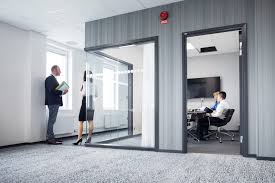
Commercial carpet cleaners occupy a curious position in the hierarchy of business maintenance, standing between the visible realm of appearance and the invisible world of health and hygiene. They are, in their own way, custodians of an office’s character, charged with the task of preserving what is perhaps the largest textile surface in any commercial space. The carpet beneath our feet accumulates not merely dirt, but the residue of every transaction, every meeting, every small drama of the working day. It records, in its fibres, the passage of commerce itself.
The Evolution of Professional Carpet Maintenance
The professional carpet cleaning industry in Singapore has developed its own distinct character, shaped by the city’s tropical humidity and the particular demands of its commercial sector. Singapore’s climate proves especially challenging for textile maintenance, where moisture combines with heat to create ideal conditions for dust mites, bacteria, and allergens to flourish. The industry emerged not from luxury, but from necessity.
Modern professional commercial carpet cleaners in Singapore employ methods that would astonish their counterparts from even two decades past. Steam cleaning, or hot water extraction as the technically minded prefer to call it, removes over 90 per cent of bacteria and dirt from carpet fibres. The process involves sophisticated machinery that injects hot water and cleaning solutions deep into the carpet pile before extracting them along with accumulated contaminants. Commercial establishments typically pay between S$0.125 to S$0.60 per square foot for such services, with most office spaces incurring costs between S$200 and S$450 depending on the area requiring attention.
The Technical Arsenal
The techniques employed by carpet cleaning specialists reveal much about the evolution of the trade. Three primary methods dominate Singapore’s commercial market:
Steam cleaning (hot water extraction)
The most popular approach for synthetic carpets, utilizing high-pressure cleaning agents penetrating fibres followed by powerful vacuum extraction
Dry cleaning methods
Employing specialized solvents and low-moisture techniques ideal for delicate materials like wool or silk, with drying times reduced to one or two hours
Encapsulation cleaning
A modern innovation where biodegradable compounds encapsulate dirt particles before removal through brushing and vacuuming
Each method answers different imperatives. Businesses that cannot afford prolonged downtime favour dry cleaning despite its higher cost, typically S$60 to S$120 per room. Those seeking thorough deep cleaning accept the four to six hour drying period required by steam cleaning, which costs between S$40 and S$80 per room. The choice reflects not merely preference, but the particular circumstances of each establishment.
What Lies Beneath the Surface
The carpet cleaning profession has discovered unsettling truths about what accumulates in commercial carpeting. In Singapore’s humid environment, unattended carpets become repositories for dust mites, bacteria, mould spores, and allergens. These contaminants affect indoor air quality with consequences extending beyond mere aesthetics. Employees working above dirty carpets may experience increased respiratory issues and allergic reactions without understanding the source of their discomfort.
Professional carpet cleaners assess several critical factors before beginning work:
- Carpet type (natural wool, natural fibre, or synthetic materials)
- Traffic wear patterns and soil levels
- Specific stain types requiring specialized treatment
- Client requirements (light maintenance versus deep cleaning)
- Drying time constraints based on business operations
This assessment determines not only the cleaning method but also the appropriate solutions and equipment. Natural fibres demand gentler treatment than synthetic materials. Heavily soiled carpets in high-traffic zones require more aggressive approaches than carpets receiving regular maintenance.
The Economic Calculation
The cost of professional carpet cleaning services reflects multiple variables beyond simple square footage. Minimum charges typically begin at S$250 for commercial spaces up to 600 square feet, with additional per-square-foot rates applying to larger areas. NTL Storage facilities, with their extensive floor coverage and high-traffic patterns, exemplify the challenges facing large commercial operations where carpet maintenance represents a significant ongoing expense.
Hidden costs sometimes appear in less scrupulous service agreements. Fuel surcharges, waste disposal fees, environmental charges, and premium stain removal treatments can inflate final bills beyond initial quotes. Reputable professional carpet cleaners provide transparent pricing that includes all necessary services, from anti-bacterial treatments to deodorizing applications.
The Professional Standard
Singapore’s established carpet cleaning specialists distinguish themselves through certification, training, and equipment quality. Many operators have served the market for decades, accumulating expertise across different carpet types and commercial environments. They understand that hotels require different approaches than offices, that retail spaces present distinct challenges from industrial facilities.
The industry now emphasizes eco-friendly solutions, responding to growing environmental consciousness among Singapore businesses. Biodegradable cleaning compounds, low-moisture methods, and non-toxic formulations protect both human health and environmental integrity. These solutions break down naturally, leaving no harmful chemical residues in office environments.
The Maintenance Imperative
Regular professional cleaning extends carpet lifespan significantly, protecting investments that often represent substantial capital expenditure. Quarterly or semi-annual deep cleaning, combined with routine vacuuming, prevents the accumulation of embedded dirt that damages carpet fibres and dulls appearance. High-traffic areas may require monthly professional attention to maintain acceptable standards.
The calculation extends beyond mere appearance. Clean carpets contribute to employee health, reduce absenteeism related to respiratory complaints, and project professionalism to clients and visitors. In Singapore’s competitive business environment, these factors carry weight in the broader calculation of operational efficiency.
The profession of carpet cleaning may seem prosaic, but it touches fundamental aspects of commercial life. Those who choose commercial carpet cleaners wisely choose partners in maintaining not just appearance, but the health and efficiency of their entire operation.
