
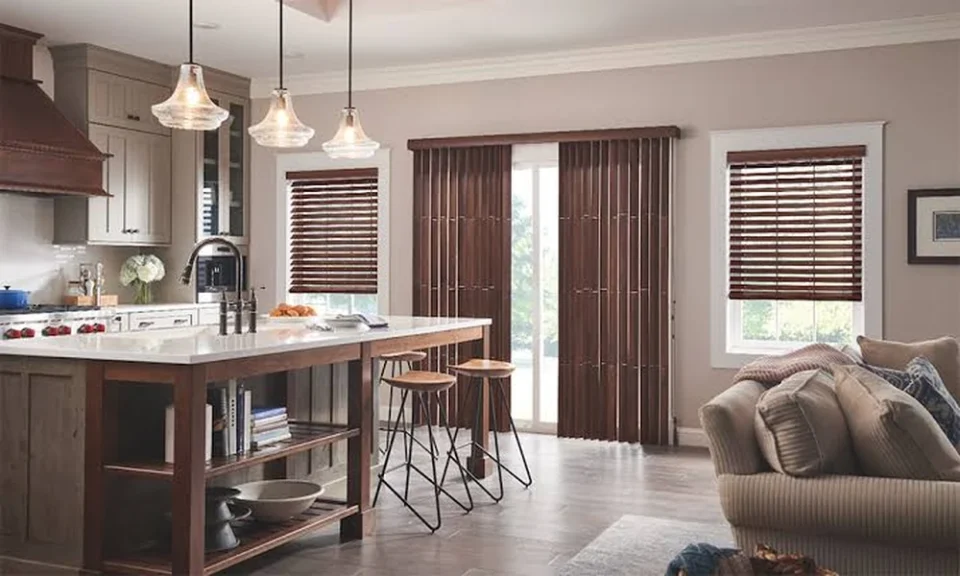
Window treatments have a curious ability to either reinforce the character of a room or quietly undermine it. The right curtains or shades can make a modern interior feel softer, give a traditional room greater elegance, or bring warmth to a space that feels a little too restrained. The wrong choice can look disconnected, regardless of how beautiful the fabric might be.
That is because window treatments are not simply functional additions. They are architectural and decorative elements, often occupying a considerable amount of visual space.
The good news is that there is no shortage of ways to dress a window. From streamlined roman shades to generous full-length drapes, the right choice depends on the design language of the room, its architecture, the existing palette, and the atmosphere you want to create.
Here is how to approach window treatments across some of the most popular interior styles.
Modern: Clean Lines and Considered Simplicity
Modern interiors tend to favor clean silhouettes, restrained palettes, and materials that feel intentional rather than overly decorative. Window treatments should follow the same philosophy.
Simple floor-length curtains in linen, cotton, or a softly textured fabric can add warmth without disrupting the room’s streamlined character. Solid colors and subtle patterns tend to work particularly well, especially when the furniture and architecture already provide plenty of visual interest.
Custom roman shades are another excellent option. Their tailored construction complements modern windows beautifully, particularly when the fabric has a subtle weave rather than an elaborate print.
The key is restraint. You want softness and texture, but not unnecessary ornamentation.
Contemporary: Play With Texture and Contrast
Contemporary interiors give you a little more freedom to experiment.
While clean lines remain important, contemporary rooms often incorporate contrasting materials, sculptural furniture, bold artwork, and unexpected color. Window treatments can respond to those elements without necessarily matching them.
A simple curtain in a rich neutral can soften a room filled with hard surfaces such as glass, metal, and stone. Alternatively, a geometric or abstract fabric can provide a graphic counterpoint to curved furniture and organic shapes.
Layering can also work beautifully. A sheer curtain paired with a heavier drape introduces depth while maintaining the clean aesthetic associated with contemporary design.
For a polished result, focus on proportion. Contemporary spaces tend to look best when the window treatment feels precise rather than fussy.
Minimalist: Less, But Better
Minimalism demands restraint, but that does not mean windows should be left bare.
In fact, carefully chosen window treatments can be essential to preventing a minimalist room from feeling cold or unfinished. The key is to choose materials that contribute subtle depth rather than visual clutter.
A softly textured linen roman shade can add warmth to a white bedroom without interrupting its simplicity. Floor-to-ceiling curtains in a color close to the walls can create a continuous visual plane while providing softness and privacy.
Keep patterns subtle or eliminate them altogether. Instead, focus on texture, natural materials, and impeccable proportions.
In a minimalist interior, even small imperfections become noticeable, which makes precise installation and custom sizing particularly valuable.
Transitional: The Best of Both Worlds
Transitional interiors sit comfortably between traditional and contemporary design. They combine classic forms with cleaner lines, making them wonderfully flexible when it comes to window treatments.
This style can accommodate both curtains and roman shades, depending on the architecture and function of the room.
A neutral linen curtain with elegant fullness can soften contemporary furniture, while a tailored roman shade can give traditional molding a fresher appearance. Subtle stripes, checks, and tonal patterns can add character without pushing the room too firmly in one stylistic direction.
If you are unsure which style of window treatment to choose, transitional interiors offer considerable room for experimentation.
Traditional: Embrace Elegance
Traditional interiors provide an ideal setting for beautiful curtains.
Full-length drapes in linen, cotton, velvet, or other substantial fabrics can complement classic furniture, detailed molding, antique pieces, and decorative artwork. Patterns such as florals, damasks, paisleys, and traditional stripes can also feel entirely at home.
The fullness and construction of the curtains matter here. Traditional interiors can accommodate more generous folds, decorative headings, contrast trims, and other tailored details.
But traditional does not have to mean heavy.
A relaxed linen curtain in a soft neutral can give a traditional room a lighter, more contemporary feel while preserving its architectural character.
Modern Traditional: Classic Without Feeling Formal
Modern traditional design takes familiar elements and gives them a more relaxed interpretation.
This is where traditional patterns and contemporary simplicity can meet beautifully.
Consider a classic floral or botanical fabric paired with a clean curtain silhouette. Or use a simple textured linen roman shade against detailed molding. The contrast between traditional architecture and understated fabric can make the entire room feel fresher.
The trick is to avoid making every element equally formal.
A traditional room can feel much more current when one or two elements deliberately break from convention.
Farmhouse: Relaxed and Natural
Farmhouse interiors are naturally suited to relaxed textiles.
Linen, cotton, ticking stripes, simple checks, and understated botanical prints can complement the natural materials typically found in these spaces. Soft neutrals and muted earth tones tend to work particularly well.
Full-length curtains can add softness to rooms with exposed wood, while roman shades are useful for kitchens and smaller windows.
Avoid anything that feels excessively polished or ornate. The beauty of farmhouse style comes from materials that feel comfortable, tactile, and lived-in.
Coastal: Light and Airy
Coastal interiors benefit from window treatments that preserve their sense of openness.
Lightweight linen curtains are a natural choice, particularly in soft whites, creams, sandy neutrals, and muted blues. Sheer roman shades and voile curtains can also work beautifully when the goal is to maximize daylight while maintaining some privacy.
The biggest mistake is leaning too heavily into obvious nautical motifs. You do not need anchors, ropes, or overtly beach-themed patterns to create a coastal atmosphere. Often, the combination of natural fabric, soft color, and generous daylight does the job far more elegantly.
Scandinavian: Softness With Structure
Scandinavian interiors tend to balance simplicity with warmth, making texture particularly important.
Light-colored linen and cotton curtains can soften pale walls and natural wood furniture. Simple roman shades can provide privacy without introducing unnecessary visual weight.
White, cream, pale gray, beige, and muted earthy shades are particularly effective.
The goal is to keep the treatment functional and beautiful without making it feel overly decorative.
A subtly textured fabric can provide just enough interest to prevent the room from feeling stark.
Eclectic: Let Personality Lead
Eclectic interiors are where window treatments can become much more expressive.
If the room already combines different eras, colors, patterns, and materials, the window can be another opportunity to tell that story. A vintage-inspired floral might sit beautifully alongside contemporary furniture, while a bold geometric curtain can provide contrast against traditional pieces.
The challenge is not avoiding mismatched elements. It is finding a thread that connects them.
Color is often the easiest way to create that connection. Choose a curtain pattern that picks up a shade already present elsewhere in the room, even if the overall design is completely different.
Maximalist: More Pattern, More Possibility
Maximalist interiors can embrace window treatments with confidence.
Bold florals, large-scale botanicals, checks, stripes, and decorative prints can all work when the room has enough visual depth to support them. Patterned curtains can become a major focal point, particularly when paired with relatively quiet walls.
If the walls are already heavily patterned, however, consider balancing them with a solid curtain in a rich texture.
The objective is not simply to add more. It is to create a layered composition where every element has a role.
Mid-Century Modern: Keep It Graphic
Mid-century modern interiors often benefit from window treatments that reinforce their clean geometry.
Simple curtains in solid colors, subtle stripes, or restrained geometric patterns can complement iconic furniture silhouettes without competing with them. Roman shades can also work particularly well because of their structured form.
Look for colors that complement the characteristic wood tones, upholstery, and accent colors often found in these spaces.
Avoid overly ornate treatments. The beauty of mid-century design lies in its clarity.
Industrial: Soften the Hard Edges
Industrial interiors often contain concrete, exposed brick, steel, leather, and other hard surfaces. Window treatments provide an opportunity to soften that palette.
Simple linen or cotton curtains can introduce warmth without compromising the room’s architectural character. Charcoal, warm gray, taupe, cream, and other restrained shades can work particularly well.
If the room has very large windows, full-length curtains can also help absorb some of the visual hardness of expansive glass and metal.
The treatment should feel substantial enough to balance the architecture but simple enough to preserve its raw character.
Traditional and Modern Can Coexist
Perhaps the most important thing to remember is that interior styles are not strict categories.
A room can have traditional molding and contemporary furniture. A modern kitchen can feature a vintage-inspired roman shade. A minimalist bedroom can contain an antique chair.
Your window treatment does not have to belong to exactly the same design era as every other object in the room.
Sometimes contrast is what makes an interior interesting.
A traditional floral curtain can bring softness to a contemporary room. A clean-lined roman shade can modernize a traditional space. A relaxed linen can make ornate architecture feel more approachable.
The key is to make the contrast feel deliberate.
Why Custom Window Treatments Make a Difference
Regardless of your interior style, proportion remains one of the most important aspects of a successful window treatment.
The right fabric can still look wrong if the curtain is too short, the shade is poorly proportioned, or the fullness does not suit the window.
This is where custom curtains and custom roman shades can offer an advantage. Rather than adapting a standard treatment to the room, the treatment is designed around the architecture, dimensions, fabric, and desired aesthetic.
You can control the finished length, fullness, mounting position, pattern placement, and construction details.
Those choices may seem subtle, but they have a considerable effect on how polished the finished room feels.
Choose the Mood, Not Just the Style
Ultimately, choosing a window treatment should be about more than labeling your interior “modern,” “traditional,” or “coastal.”
Think about how you want the room to feel.
Do you want it to be calm and understated? Warm and relaxed? Elegant and formal? Colorful and expressive? Airy and effortless?
Once you understand the mood, the appropriate window treatment becomes much clearer.
A beautifully textured linen curtain can soften a modern room. A patterned roman shade can bring personality to a minimalist space. Full-length velvet drapes can heighten the drama of a traditional interior. A simple sheer can make a coastal room feel even lighter.
The style provides the starting point, but the atmosphere is what ultimately matters.
The Right Window Treatment Completes the Room
Window treatments should never feel like an afterthought. They can reinforce the architecture, balance furniture, introduce texture, control light, and establish the mood of an interior.
From modern minimalism to traditional elegance, there is no shortage of beautiful possibilities. The trick is to choose a treatment that responds to the room rather than simply following a trend.
Consider the architecture. Look at the existing palette. Pay attention to proportion, texture, and pattern. Then choose a treatment that adds what the room needs.
Sometimes that means a dramatic patterned curtain. Sometimes it means a quiet linen shade that barely announces itself.
Either way, the best window treatment is the one that makes the entire room feel more complete.
