
Natural wood has remained a staple of interior design for centuries, but its role has changed significantly over time. Today, wood can be used in everything from architectural details and flooring to furniture and small decorative accents.
Its appeal comes from more than durability. Wood introduces grain, texture, warmth, and variation that manufactured surfaces often struggle to replicate.
Used thoughtfully, natural wood can help define the character of an entire interior.
Wood Adds Warmth to Neutral Interiors
Neutral interiors are popular because they create a calm and versatile foundation. However, a room dominated by white, gray, or beige surfaces can sometimes feel visually flat.
Natural wood provides warmth without requiring a strong accent color.
A wooden table, cabinet, bench, or set of shelves can introduce subtle brown, honey, tan, or reddish tones while maintaining a restrained palette.
The effect is particularly useful in contemporary interiors where the overall design relies on simple colors and clean surfaces.
Grain Creates Visual Movement
One of the most distinctive qualities of natural wood is its grain.
Unlike a perfectly uniform manufactured surface, wood contains lines, knots, variations, and changes in tone. These details create movement across a room without introducing a complicated pattern.
The amount of visual activity depends on the species and cut.
Some woods have relatively subtle grain, while others have dramatic patterns that immediately attract attention. This gives designers an additional way to control where the eye goes.
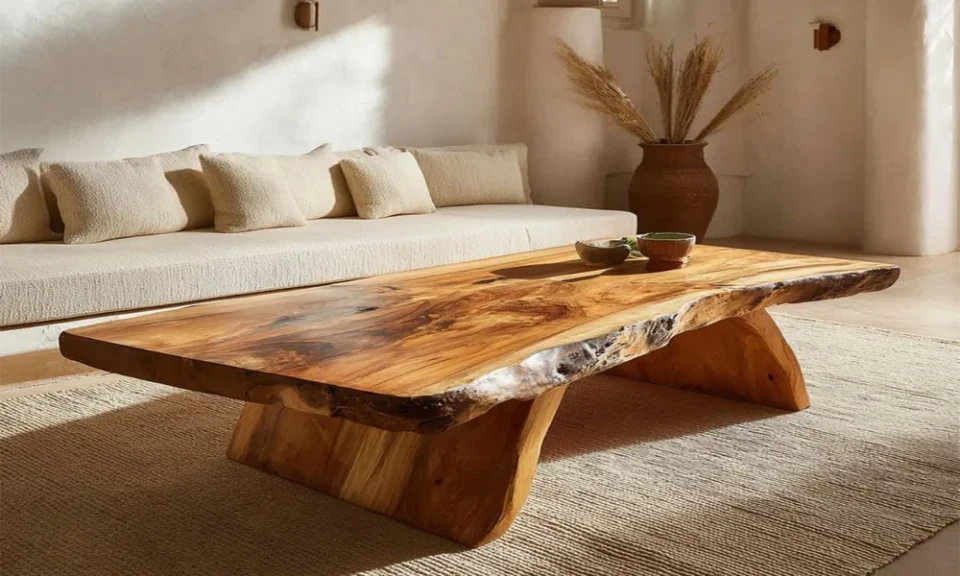
A strongly figured tabletop, for example, can become a natural focal point even when the rest of the room is relatively simple.
Wood Can Act as a Focal Point
Not every wooden element needs to be understated.
In some interiors, a distinctive piece of wood furniture can become the centerpiece of the room. A large dining table, substantial console, or live edge coffee table wood can provide a strong visual anchor without relying on bright colors or elaborate decoration.
This works especially well when surrounding furniture is relatively restrained.
The natural shape, grain, and color of the wood can provide enough interest on their own.
Different Wood Species Create Different Moods
The species of wood influences the character of a room.
Walnut is often associated with rich, darker interiors because of its deep brown tones. Oak tends to feel versatile and approachable, with a pronounced grain that works across traditional and contemporary settings.
Maple can create a lighter, cleaner appearance, while cherry develops a warmer reddish tone over time.
These differences allow wood to support different design directions without changing the basic material.
Choosing a species should therefore be based not only on durability but also on the atmosphere you want to create.
Wood Can Soften Hard Architectural Elements
Modern interiors often include materials such as concrete, glass, steel, and stone. These materials can look sophisticated, but large amounts of hard surfaces may make a room feel severe.
Wood provides contrast.
A wood dining table can soften a kitchen with stone countertops. Wooden shelving can make a room with concrete walls feel more approachable. A wooden coffee table can add warmth to a seating area dominated by metal and glass.
The contrast is often more effective than trying to make every material look similar.
Finish Changes the Character of Wood
The same piece of wood can create very different impressions depending on its finish.
A matte or natural finish tends to emphasize the material’s original character. A darker finish can make the furniture feel more formal or dramatic, while a lighter finish can create a relaxed appearance.
Glossy finishes can make wood appear more polished, whereas a low-sheen surface generally feels more understated.
When selecting furniture, consider how the finish interacts with the lighting in the room.
Natural light can reveal grain variation throughout the day, while artificial lighting can change how warm or cool the wood appears.
Natural Wood Works Across Design Styles
Wood is not limited to rustic or traditional interiors.
In modern spaces, it can be used alongside minimalist furniture and clean architectural lines. In Scandinavian-inspired rooms, lighter woods can reinforce a bright and functional atmosphere.
Traditional interiors may use darker species and more detailed furniture, while transitional spaces can combine wood with both classic and contemporary elements.
The versatility comes from the ability to change the form, finish, species, and surrounding materials.
Use Wood Strategically
Although natural wood is versatile, using too much of it can make an interior feel visually heavy.
This is especially true when several different wood species, finishes, and tones are introduced without a clear relationship.
Instead, consider establishing one dominant wood tone and using other wood elements to support it.
For example, a walnut coffee table could be paired with a few darker wood accents while the larger furniture pieces remain neutral. Alternatively, a light oak dining table could become the main wood element with smaller pieces repeating similar tones.
Consistency does not require exact matching.
The goal is to create a visual relationship between the pieces.
Imperfections Can Add Personality
One of the advantages of natural wood is that it does not need to look perfectly uniform.
Small knots, grain variations, color differences, and other natural characteristics can make a piece feel individual.
This is particularly valuable in interiors where the goal is to create a sense of authenticity. A rustic coffee table can highlight these natural characteristics through visible grain, organic edges, and a more relaxed finish, making the furniture feel connected to the material itself.
Rather than treating every variation as a flaw, natural furniture allows those characteristics to become part of the design.
That individuality can make a room feel less generic, particularly when much of the surrounding furniture comes from standardized production.
Bringing Natural Wood Into Your Home
Natural wood can play many roles in interior design. It can warm up a neutral room, soften hard materials, establish a focal point, or simply introduce texture and visual variation.
The most successful interiors do not use wood simply because it is popular. They use it intentionally.
Choose the species, tone, finish, and scale based on the atmosphere you want to create. Then allow the material enough space to be appreciated rather than surrounding it with unnecessary decoration.
