
To understand the value of professional upholstery services requires first understanding what we ask of furniture in our daily lives. Like the cells of our bodies that endure constant renewal and repair, furniture undergoes perpetual stress, absorbing weight, friction, spills, and the accumulated pressures of human use. Yet unlike biological systems with their innate capacity for regeneration, furniture relies upon human intervention to restore what time and use have worn away. In Singapore’s humid tropical environment, where moisture and temperature fluctuations accelerate material degradation, this intervention becomes not luxury but necessity. The restoration of furniture through skilled upholstery represents a form of renewal that extends far beyond surface aesthetics, addressing structural integrity whilst preserving the essential character that makes each piece valuable.
The Anatomy of Furniture Degradation
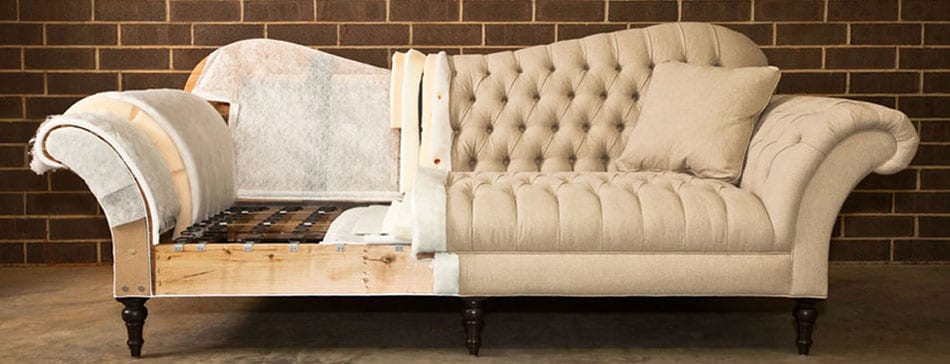
Consider how furniture deteriorates, a process that follows predictable patterns much like disease pathology. The fabric covering, exposed to ultraviolet light, body oils, and mechanical stress, shows symptoms first. Colours fade along sun-exposed surfaces. Fibres weaken at friction points where bodies make repeated contact. Seams separate under tension. Beneath this visible layer, cushioning compresses and loses resilience. Springs stretch or break. Webbing sags. The frame itself, though often structurally sound, may develop loose joints requiring attention.
Understanding this progression proves essential when evaluating whether furniture merits restoration. Professional upholstery specialists conduct what amounts to a diagnostic examination, assessing each layer to determine the extent of intervention required. Some pieces need only superficial treatment, a new fabric covering over sound foundations. Others require comprehensive reconstruction, rebuilding from frame outward.
The Scope of Restoration Services
The breadth of furniture types amenable to professional restoration might surprise those unfamiliar with the craft. Nearly any upholstered piece, regardless of age or condition, can undergo transformation given sufficient structural integrity.
Common applications include:
- Sofas and sectionals with worn fabric or compressed cushioning
- Dining chairs showing stains or tears from daily meals
- Vintage armchairs requiring period-appropriate restoration
- Office seating needing professional-grade fabric replacement
- Ottomans and footstools with flattened padding
- Headboards requiring aesthetic updates to match bedroom redesigns
- Antique pieces with historical or sentimental significance
- Custom furniture built with quality frames but dated covering
“The decision to pursue upholstery services often hinges on recognising quality construction beneath deteriorated surfaces,” as experienced craftspeople observe. Mass-produced furniture from recent decades may cost less to replace than restore. However, pieces built before the era of planned obsolescence, constructed with hardwood frames and hand-tied springs, possess inherent value that transcends their current appearance.
Material Science and Fabric Selection
The selection of replacement fabric requires understanding how different materials perform under specific conditions. Singapore’s tropical climate creates particular demands. High humidity promotes mould growth on natural fibres lacking proper treatment. Temperature differentials between air-conditioned interiors and outdoor heat create expansion and contraction cycles that stress fabric bonds.
Modern performance textiles address these challenges through molecular engineering. Synthetic fibres woven with specific characteristics resist moisture absorption, inhibit bacterial colonisation, and withstand abrasion from repeated use. Treated natural fabrics combine traditional aesthetics with contemporary protective coatings. The choice between materials involves balancing appearance, tactile qualities, durability, and maintenance requirements.
The Restoration Process: A Systematic Approach
Professional upholstery work follows methodical procedures refined through generations of practice. Initial disassembly proceeds carefully, with each component examined and documented. Old fabric removal reveals the piece’s internal architecture, allowing assessment of springs, webbing, padding, and frame condition.
Repairs address structural issues first. Loose frame joints receive reinforcement. Broken springs require replacement. Stretched webbing gets renewed. This foundational work determines how the restored piece will feel and function, regardless of surface appearance.
New padding follows, cut to precise dimensions and layered to restore original contours or improve comfort according to client preference. The fabric covering represents the culminating phase, requiring pattern matching, precise cutting, and skilled stretching to achieve smooth, wrinkle-free surfaces. Decorative elements like piping, buttons, or contrast stitching add finishing touches that transform competent work into exceptional craftsmanship.
Economic and Environmental Considerations
The mathematics of restoration versus replacement deserves careful analysis. For premium furniture with substantial original cost, reupholstery services typically represent a fraction of replacement expense whilst preserving superior construction quality. For mass-market pieces, the calculation shifts, though sentimental value sometimes justifies restoration costs exceeding market worth.
Environmental considerations add another dimension to this equation. Furniture manufacturing consumes significant resources and energy. Transportation from distant factories generates substantial carbon emissions. Restoration extends existing pieces’ useful lives, reducing waste whilst conserving resources. In Singapore’s increasingly sustainability-conscious culture, these factors influence decision-making alongside purely economic calculations.
Maintenance and Longevity
Like any medical intervention, restoration succeeds best when followed by proper maintenance. Regular vacuuming prevents particle accumulation that abrades fibres. Immediate spill response minimises staining. Professional cleaning at appropriate intervals maintains fabric integrity and appearance. These practices, simple in execution, substantially extend the intervals between restoration cycles.
The Clinical Perspective on Value
The transformation achieved through skilled restoration transcends mere economics. A beloved armchair that witnessed decades of family conversations, a dining set inherited from grandparents, an office chair that supported years of productive work, these pieces carry meaning beyond their material components. Quality upholstery work preserves this accumulated significance whilst restoring functional utility.
Whether addressing a single cherished piece or restoring an entire furniture collection, the renewal made possible through expert upholstery services demonstrates how skilled intervention can reverse degradation, extend useful life, and preserve both practical value and emotional meaning in furniture that has earned its place in homes and offices through years of faithful service.
