
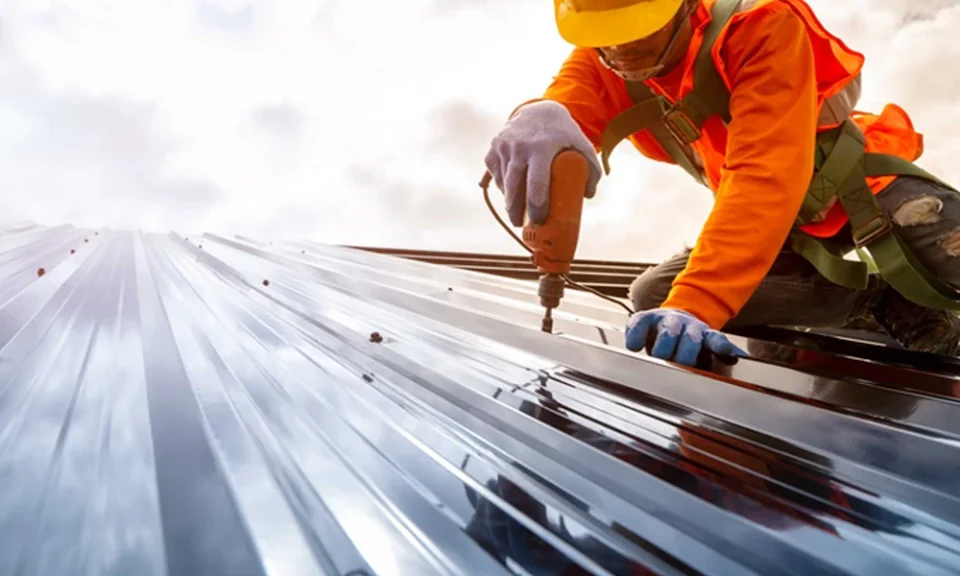
Commercial roofing is a significant investment for any building owner. When a roof begins showing its age, however, complete replacement isn’t always the only option. In many cases, a commercial roof coating can help restore and protect an existing roofing system while extending its useful life.
Roof coatings have become a popular option for warehouses, manufacturing facilities, office buildings, retail properties, and other commercial structures, particularly those with flat or low-slope roofs. Understanding how these systems work can help property owners determine whether coating or replacing a roof makes more sense for their building.
What Is a Commercial Roof Coating?
A commercial roof coating is a fluid-applied material installed over an existing roofing surface. Once cured, the coating creates a continuous protective membrane across the roof.
Unlike roofing systems that rely heavily on seams between individual sections of material, a properly applied coating creates a seamless surface. This can be particularly useful on commercial roofs where penetrations, seams, flashing, and areas around HVAC equipment can become common sources of water intrusion.
Several types of coatings are available, including silicone, acrylic, polyurethane, and other elastomeric products. The right material depends on the existing roofing system, roof condition, climate, drainage, and other building-specific factors.
Why Are Commercial Roof Coatings Becoming More Popular?
One of the biggest reasons building owners consider roof coatings is simple: replacing a large commercial roof can be expensive and disruptive.
If the underlying roofing system is still structurally sound, restoration may allow a building owner to address aging roof surfaces without immediately tearing off and replacing the entire system.
A coating can also provide an additional layer of protection against conditions commercial roofs regularly encounter, including:
- UV exposure
- Rain and moisture
- Ponding water
- Temperature fluctuations
- Minor surface deterioration
- Normal weather-related wear
The benefits vary considerably depending on the coating material and the condition of the existing roof, which is why an inspection should generally come before deciding on a restoration system.
Silicone Roof Coatings for Flat and Low-Slope Roofs
Silicone is one of the more common materials used for commercial roof restoration.
Once applied, silicone forms a flexible membrane designed to resist water and prolonged UV exposure. Its resistance to ponding water can make it particularly useful for certain flat and low-slope commercial roofs where water may remain on the surface after heavy rain.
Silicone coatings can also be applied around many of the unusual shapes and penetrations found on commercial roofs. Instead of cutting sheets of roofing material around vents, pipes, curbs, and equipment, the liquid coating conforms to the surface during application.
For property owners researching commercial roof coatings, it’s important to consider the existing roof system and its overall condition before choosing a particular coating material.
Roof Coating vs. Roof Replacement
A coating shouldn’t be viewed as a way to avoid necessary roof replacement indefinitely.
If a roof has extensive moisture underneath the membrane, widespread structural problems, saturated insulation, or severe deterioration, applying a coating over the surface may not address the underlying issue.
That’s why a professional roof evaluation is an important first step.
When the existing system remains in suitable condition, however, restoration may offer several advantages over replacement. There is typically less material to remove, less disruption to normal building operations, and less roofing waste generated during the project.
It may also allow owners to postpone the much larger capital expense associated with complete roof replacement.
Proper Preparation Is Critical
The performance of a roof coating depends heavily on what happens before the coating is applied.
The roof should first be inspected for leaks, damaged roofing materials, deteriorated flashing, drainage problems, and other defects. Necessary repairs should be completed before restoration begins.
The surface also needs to be thoroughly cleaned and prepared. Dirt, oils, loose materials, and other contaminants can interfere with adhesion.
Depending on the roof and coating system, preparation may include pressure washing, repairing seams, reinforcing problem areas, addressing penetrations, and applying primers where necessary.
Skipping these steps can significantly reduce the effectiveness of the finished system.
Can Roof Coatings Help With Energy Efficiency?
Certain reflective roof coatings may also help reduce the amount of solar heat absorbed by a commercial roof.
Traditional dark roofing materials can become extremely hot in direct sunlight. Reflective coatings are designed to reflect more solar radiation rather than absorbing it into the roofing assembly.
The actual impact on building energy consumption varies based on factors such as insulation, building design, climate, HVAC efficiency, roof exposure, and coating characteristics. Still, reducing roof surface temperatures can be an additional consideration when evaluating restoration options.
How Long Do Commercial Roof Coatings Last?
There isn’t a single lifespan that applies to every coated roof.
Longevity depends on the coating material, thickness, quality of installation, existing roof condition, climate, drainage, maintenance, and amount of rooftop traffic.
Routine inspections remain important even after a coating has been installed. Checking the roof periodically can help identify damage around drains, seams, penetrations, HVAC equipment, and high-traffic areas before small problems become larger ones.
Some coating systems may also be eligible for recoating later, potentially extending the service life of the roof again without immediately requiring a complete tear-off.
Is a Roof Coating Right for Your Building?
The best candidates for commercial roof coatings are generally roofs that have begun to show signs of aging but remain fundamentally sound.
A qualified commercial roofing professional can inspect the existing system, identify areas of concern, and determine whether restoration is appropriate. In some cases, coating the roof may provide years of additional service. In others, replacement may be the more practical long-term solution.
For commercial property owners, the important takeaway is that an aging roof doesn’t automatically mean it’s time for a complete tear-off. Evaluating restoration and coating options before committing to replacement can help owners make a more informed decision about one of their building’s most important assets.
