
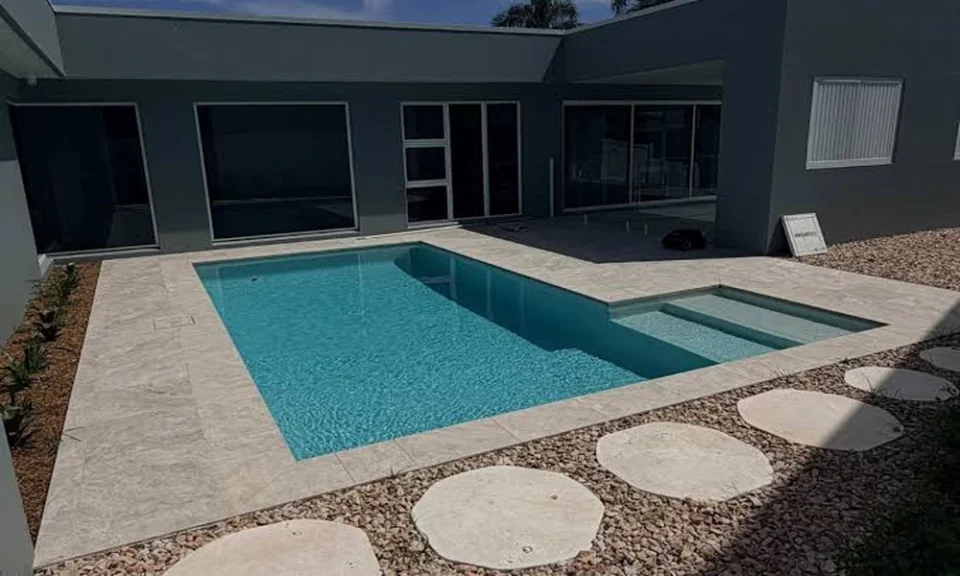
Building a backyard pool has always been a significant investment, but for Australian homeowners planning a build in 2026, the numbers are looking different than they did just a few years ago. Materials, labour and trades availability have all become more expensive across the construction sector, and pool building is no exception. That shift is prompting more buyers to take a closer look at fibreglass pools as an alternative to the traditional concrete build, and to weigh cost, build time and long-term maintenance more carefully than ever before.
The Cost Equation Is Shifting
Concrete pools have long been popular in Australia for their flexibility of shape and size, but they are also labour-intensive to build, requiring extensive on-site steel-fixing, shotcreting, tiling and curing time. As trade labour costs continue to rise, that labour intensity translates directly into higher build costs. Fibreglass pools sydney, by contrast, are manufactured off-site in a factory setting, which insulates a portion of the cost from local trade shortages and lets manufacturers achieve efficiencies that are harder to replicate on a construction site. As overall costs rise across the board, the gap between the two options has become something buyers are paying much closer attention to.
None of this means one option is simply better than the other in every case – the right pool still depends heavily on the site, the design brief and the buyer’s own priorities. But it does mean the cost conversation looks different in 2026 than it did a decade ago, and buyers who are comparing quotes are increasingly asking builders to explain not just the headline price, but where that price comes from and how exposed it is to further increases in materials and labour.
Fibreglass Pools: Cost and Build Time
A fibreglass pool shell is pre-formed off-site and delivered ready to install, so the on-site work is largely limited to excavation, craning the shell into place, backfilling and finishing touches like paving and fencing. This generally means a shorter overall build time compared with concrete, often measured in weeks rather than months from the start of excavation to a swimmable pool. Because so much of the cost is fixed at the point of manufacture, fibreglass pool pricing also tends to be more predictable up front, which is a meaningful advantage for buyers trying to budget carefully in the current climate. The trade-off is less flexibility in shape and size, since buyers choose from a manufacturer’s range of shell designs rather than a fully custom layout.
Concrete Pools: Cost and Build Time
Concrete remains the go-to option for homeowners who want a fully bespoke pool shape, unusual dimensions, or features like a beach entry or an infinity edge that are harder to achieve with a pre-formed shell. That flexibility comes at a cost, though, both in dollars and in time. A concrete pool build typically involves a longer sequence of trades – excavation, steel fixing, shotcreting, interior finishing and curing – each of which needs to be scheduled and completed before the next can begin. With trade costs and availability under pressure in many parts of the country, concrete builds are more exposed to price increases and scheduling delays than a factory-built fibreglass shell.
Maintenance Over the Long Term
Beyond the upfront build cost, ongoing maintenance is a growing part of the conversation for cost-conscious buyers. Fibreglass pools have a smooth, non-porous gelcoat surface that generally resists algae growth better than the more porous surface of a concrete pool, which can mean less chemical use and less scrubbing over time. Concrete pools, particularly those with tiled or pebble interiors, often need periodic resurfacing or re-tiling over the years, which is an additional cost that fibreglass owners typically don’t face in the same way. For buyers thinking beyond the initial build price to the total cost of ownership, this is increasingly factoring into the decision.
Why More Buyers Are Choosing Fibreglass in 2026
Put together, faster build times, more predictable pricing and lower ongoing maintenance are steering a growing number of Australian buyers toward fibreglass, particularly those who are budget-conscious or want to be swimming sooner rather than later. That doesn’t mean concrete has lost its place – for highly customised designs, it’s often still the only way to achieve a particular look or feature. But for a large share of standard suburban backyards, fibreglass is proving to be the more cost-effective and time-efficient choice as construction costs continue to climb.
Choosing a Builder Who Knows Your Local Conditions
Whichever pool type a buyer leans toward, the builder they choose matters just as much as the pool itself. Soil conditions, drainage, council requirements and site access all vary from suburb to suburb, and an experienced local builder will factor these into the design and quote rather than treating every backyard the same. In South Sydney, for example, a fibreglass specialist like Barrier Reef Pools South Sydney works within these local conditions every day, which is worth keeping in mind when comparing quotes rather than focusing on sticker price alone. As with any major renovation, getting a handful of detailed, like-for-like quotes remains the best way for buyers to understand what a pool will genuinely cost in their own backyard.
