
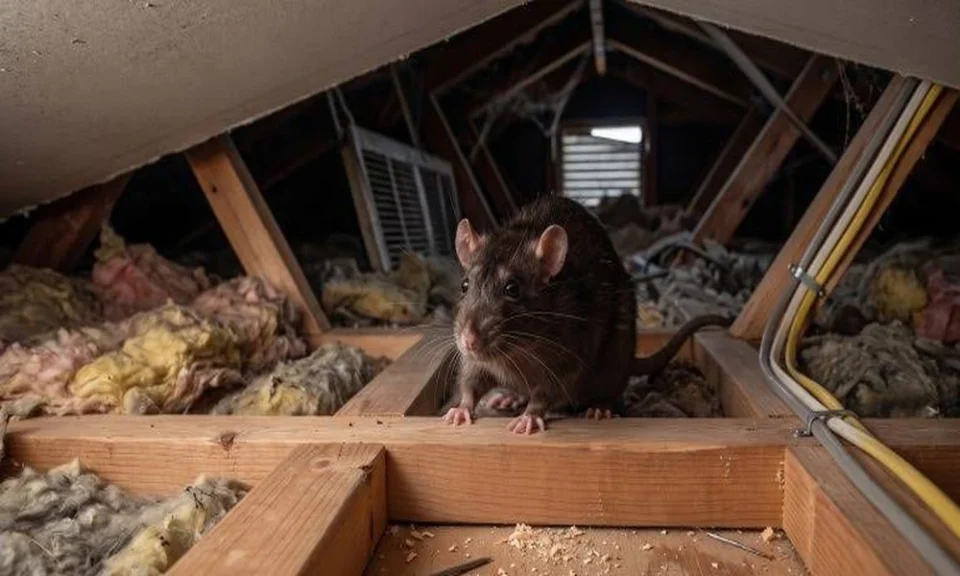
Roof rats are the most common rat in central Florida, and the older parts of Clermont can give them close to ideal conditions. Mature oak canopy, long-established citrus and other fruit trees, and older homes with some wear can supply both the food and the travel routes these rats use. A homeowner who calls Saela Pest Control about scratching in the ceiling is usually hearing a roof rat. Mice and ground-dwelling rats behave differently and turn up in different parts of a property.
Roof rats climb. Instead of burrowing like the Norway rat, they travel overhead and nest in the highest dry space they can reach. In most homes that space is the attic.
Why Roof Rats Head for the Attic
UF/IFAS describes roof rats using utility lines and tree branches to reach food and water and to get into buildings. They move through a yard overhead and seldom touch the ground. An attic can give them a warm, dry, sheltered space above the activity of the house and close to food outside.
That pattern often makes nighttime scratching or movement one of the first signs a homeowner notices. Roof rats are active after dark. A homeowner may hear scratching or scurrying in the attic or along the top of a wall once the house is still.
What Older Clermont Neighborhoods Offer
The established areas around Clermont have tree canopy that newer subdivisions do not yet have. Mature oaks and long limbs can reach over rooftops and give a roof rat a direct path to the roofline. Older fruit trees add a food source that has been in place for decades. Citrus, loquat, and similar trees drop fruit that can feed a population through much of the year.
Older homes can also have more ways in. Soffits, fascia boards, roof vents, and gable vents loosen as a house ages. A roof rat can use an opening of about half an inch, so a worn vent screen or a small opening where a utility line enters can be enough. Detached garages and sheds on older lots give them more shelter near the house.
Signs a Roof Rat Is Overhead
The noise is the first clue. A few other signs can confirm it:
- Small dark droppings, curved and about a quarter to half an inch long, in the attic or along the tops of walls.
- Dark smear marks where their fur rubs grease along the beams, pipes, and wires they travel.
- Citrus on the tree with a clean round hole about the size of a quarter, hollowed out from one side.
- Chewed wiring, which UF/IFAS notes can start fires and is one of the more serious problems these rats cause.
- Gnaw marks on stored items, plastic, or the edge of the attic hatch.
How to Keep Them Out
The overhead routes are the biggest factor with this pest. Cutting them off can do more than trapping alone. UF/IFAS recommends keeping fruit trees away from fences, wires, and other vegetation, and pruning limbs so they do not touch the house or the ground. Trimming limbs back several feet from the roofline removes the bridge a roof rat uses to reach it.
Removing fallen fruit takes away the food that keeps a population near the house. Sealing openings keeps the rats already inside from being replaced. The material has to be metal or hardware cloth, since roof rats can gnaw through plastic and foam. Trapping in the attic clears the current rats. The trimming and sealing keep the next ones from moving in.
A roof rat problem in an older Clermont home usually means the trees and the roofline have grown close together over the years. Trimming that connection and closing the openings a house has gained with age can do more to end the problem than trapping alone.
