
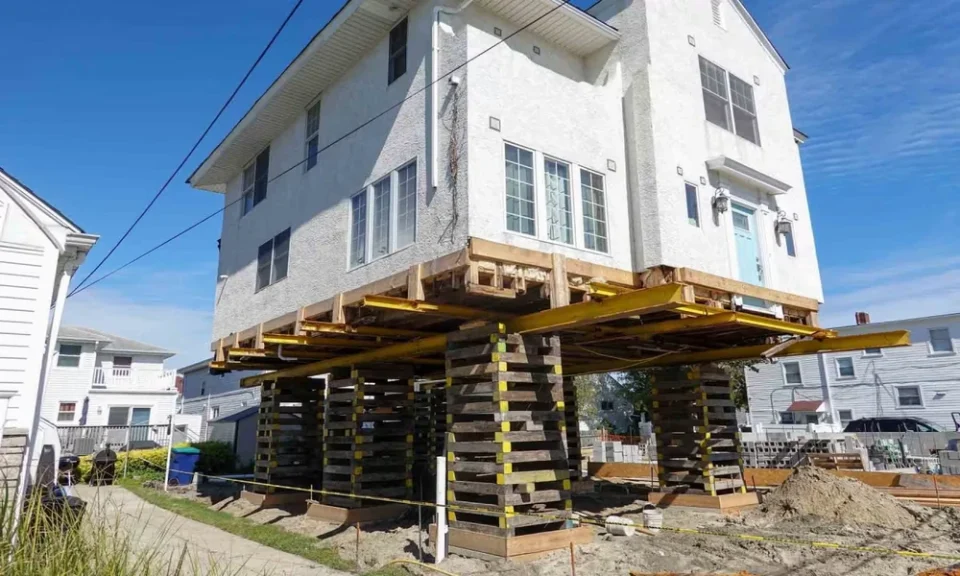
Indianapolis has a way of making construction feel personal. Homes here aren’t just static structures, they’re interactive and long-standing parts of neighborhoods shaped by time, weather, and shifting ground. So when restoration begins, it’s rarely just about fixing concrete. It’s about protecting daily life while something complex happens beneath it.
That’s where experienced contractors change the entire experience. Not by making the work smaller, but by making it easier to live through. Good concrete work in this city isn’t loud disruption-it’s controlled problem-solving. It’s knowing how to work inside homes, under pressure, without turning everything upside down in the process.
Keeping Dust from Taking over the Home Life You’re Trying to Maintain
Most homeowners underestimate dust until they experience the buildup firsthand. It doesn’t stay in the work zone. It travels through vents, settles into soft surfaces, and quietly spreads into spaces that were supposed to stay untouched.
In older Indianapolis homes especially, airflow systems and tight layouts make this even harder to control. That’s why professional contractors don’t treat dust as an inconvenience-they treat it as something that has to be contained from the very beginning.
Instead of reacting after the mess happens, Home Restoration Indianapolis experts design advanced silica-dust control protocols that helps structure the restoration work around preservation and prevention of structural contamination. Respirable crystalline silica dust is one of the most heavily regulated, high-stakes liabilities in modern commercial construction. Hence it needs proper containment measures:
- Sealed containment zones built before any cutting starts
- Direct tool-level extraction so dust never becomes airborne
- Controlled moisture methods to keep particles grounded from the start
The goal isn’t just a cleaner job site. It’s protecting the rhythm of the home itself-so families can still move through their space without feeling like they’ve lost control of it. This is often the difference between “we survived renovation” and “we barely noticed it was happening.”
Doing Heavy Concrete Work without Making the House Feel Like It’s Breaking Apart
Anyone who has lived through jackhammer demolition knows the feeling-the vibration, the noise, the sense that the entire structure is under stress. In tightly built Indianapolis neighborhoods, that disruption doesn’t stay contained. It spreads through walls, neighboring homes, and sometimes even emotional tolerance.
Modern contractors approach this differently now; focusing on control, not force. So instead of smashing concrete apart, contractors leverage sophisticated non-invasive structural concrete stabilization strategies.
- Break slabs internally so the structure itself isn’t disturbed
- Lift sunken areas instead of tearing everything out and starting over
- Use precise drilling so the stress stays exactly where it should
The difference is bigger than technique, it’s respecting the atmosphere.
That way, a home under repair doesn’t feel like it’s being torn or attacked. Occupiers just need to feel a deliberate and careful restoration project, and with intention. And in older or closely spaced Indianapolis properties, that difference protects finishes, neighbors, and overall stability.
Working With a Ground That Doesn’t Stay Still
One of the realities homeowners eventually face in Central Indiana is that the ground moves. Not dramatically, but consistently. Clay-heavy soil expands with moisture and contracts when dry, slowly shifting everything built on top of it. And when the ground itself becomes unstable, every mathematical calculation and physical effort above it feels completely useless.
That’s why experts in concrete restoration approach foundation issues holistically from the subsurface up, since vulnerabilities rarely come from a single cause. They come from time, pressure, and natural cycles working quietly underneath the structure. As such, the smarter approach isn’t to rip everything out and restart. It’s to stabilize what’s already there and work with the movement, instead of fighting it blindly.
That often includes:
- Deep injection systems that repair cracks from the inside
- Internal wall reinforcement that redistributes structural stress
- Subsurface void filling to restore stable support beneath slabs
Near moisture-sensitive areas like the White River corridor and surrounding zones, this approach becomes even more important. The goal is understanding what the building has been dealing with all along, and restoring balance so it can adapt without failing repeatedly.
Keeping the Home Livable While Work Is Happening Around It
Construction doesn’t happen in empty spaces. It happens in homes where life continues-families moving through hallways, cars still needing access, neighbors sharing narrow driveways, and outdoor spaces that can’t simply be shut down.
In many Indianapolis neighborhoods, especially older districts, this becomes one of the most sensitive parts of the entire process. So professional contractors don’t just “run the job.” They structure it so the home still functions:
- Work is phased so parts of the home stay usable
- Equipment is kept compact to protect yards and driveways
- Safe movement paths are maintained for residents and pets
- Permits and access coordination prevent neighborhood disruption
When this is done properly, something important happens: construction stops feeling like an invasion. It becomes a managed presence in the background of everyday life. The stability factor often determines whether occupants stay through the process or leave.
Finishing the Job Means Leaving the Place Better Than It Was Found
A lot of work ends when the concrete is poured or repaired. But in reality, the job isn’t finished until the environment around it is stable again. That’s because what happens immediately after matters just as much as what was fixed.
Concrete work doesn’t just impact the repaired surface, it also affects soil, drainage, runoff, and the way water moves through a property. So responsible contractors don’t just walk away when the work is done, they reset the space.
That means:
- Making sure leftover materials don’t end up in drainage systems
- Recycling broken concrete instead of treating it as waste
- Restoring soil so the ground doesn’t start eroding after the first heavy rain
Especially in a city like Indianapolis, where weather can shift quickly, leaving a site unstable isn’t just ignorance, it creates future problems for someone else. Good work doesn’t just fix what’s broken. It makes sure nothing new breaks because of it. Such a principle is not just for compliance, it’s responsibility for what remains after the work is done.
In essence, at its core, concrete restoration in Indianapolis is a blend of perfectly fixing structures and effectively managing disruption in real environments where people still live, move, and depend on their homes every day. The best contractors don’t just complete the job. They reduce the impact of it, quietly strengthening what’s already there without overwhelming the life around it.