
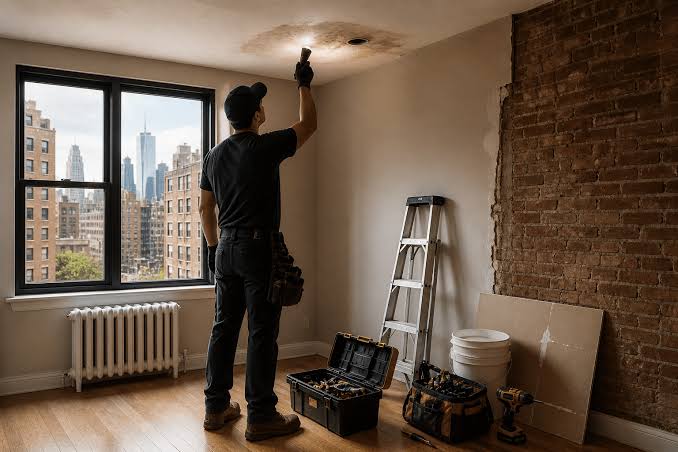
Disrepair isn’t just a landlord-tenant inconvenience
Most tenants know, broadly, that a landlord is responsible for keeping a property in reasonable repair. What’s less widely understood is how far that responsibility actually extends, and what options exist when a landlord, whether a private individual or a council, simply doesn’t act on repeated requests. Unsafe flooring, broken stairs, and ongoing structural issues aren’t just inconvenient; left unaddressed, they’re a genuine safety risk, and tenants are often entitled to more recourse than they realise.
This matters just as much for council and social housing tenants as for those renting privately. Councils have statutory repair obligations too, and a slow or non-existent response to a reported hazard doesn’t mean a tenant has no options, it usually means the next step is making that failure to act formally documented.
Unsafe flooring and stairs are more serious than they sound
A loose stair tread, a soft patch of flooring, or a bannister that’s come away from the wall can seem like a minor maintenance job on paper, but these are among the most common causes of serious injury in the home. If a landlord has been notified and hasn’t acted within a reasonable period, it’s worth understanding what unsafe flooring and stairs claims actually involve, in short, documenting the hazard, the date it was reported, and any injury or near-miss that resulted from it.
Photographs with dates, copies of any written requests to the landlord, and notes on how long the issue has persisted all strengthen a claim considerably. The earlier this documentation starts, the clearer the picture if the issue does eventually need to go further.
Council and social housing disrepair follows its own process
Council housing disrepair is often treated differently to private renting in practice, even though the underlying legal obligations are broadly similar. Councils typically have their own internal repair request systems, response time targets, and escalation routes, which can make it harder to know when a complaint has genuinely stalled versus simply being slow. If repeated reports through the normal channels haven’t produced results, it’s worth looking into council house disrepair claims as a formal route to get the repair actioned and, where appropriate, compensation considered for the period the property was left in an unsafe or substandard condition.
A clear paper trail matters here too, reference numbers from reported repairs, dates, and any written acknowledgement from the council all help establish that the authority was aware of the issue and had a reasonable opportunity to act.
Private renting carries the same obligations, differently enforced
Private landlords have broadly the same legal responsibility to keep a rented property safe and in reasonable repair as a council does, though the route for enforcing that responsibility looks a little different in practice. Where a council tenant might escalate through the local authority’s own complaints process, a private tenant is more often dealing directly with an individual landlord or a letting agent acting on their behalf, and it’s worth knowing that a letting agent’s inaction doesn’t remove the underlying landlord’s responsibility, even if the agent is who you’ve been dealing with day to day.
If a letting agent has been unresponsive, it’s often worth writing directly to the landlord as well, since ultimately they’re the party responsible for ensuring repairs are carried out, regardless of how the day-to-day management is structured.
Related issues worth knowing about
Flooring and structural hazards often sit alongside other disrepair issues in older or poorly maintained rental properties, persistent damp, leaks, or water damage frequently share the same root cause as a structural problem, and it’s worth checking whether leaks and water damage claims might also apply if that’s part of what you’re dealing with. Tackling related issues together, rather than one at a time, tends to produce a clearer and more complete picture for whoever assesses the claim.
What to do if a landlord simply isn’t responding
The single most useful thing a tenant can do, before anything else, is put every repair request in writing, even if it started as a phone call or a conversation on the doorstep, and keep a copy. A pattern of ignored written requests is far stronger evidence than a vague recollection of having mentioned it a few times. Where a hazard is genuinely dangerous, it’s also worth noting whether any injury, near-miss, or damage to belongings has resulted, since that significantly affects what a claim can cover.
Getting a free, no-obligation assessment with the HD Claims calculator is a reasonable first step if you’re unsure whether a specific situation is worth pursuing formally, it gives a sense of what might be involved before committing to anything further.
What counts as a reasonable period to wait
One of the most common questions tenants have is simply how long is reasonable to wait before escalating. There’s no single fixed answer in law, it depends on the severity of the issue, but a genuinely dangerous hazard, like a stair tread about to give way or a floor that’s visibly sagging, warrants urgent action and a much shorter tolerance than a minor cosmetic repair. A landlord or council that’s been clearly notified of a safety issue and still hasn’t responded within a few weeks has, in most circumstances, had a reasonable opportunity to act.
It’s also worth distinguishing between a repair that’s been scheduled and genuinely delayed for a legitimate reason, waiting on a part, coordinating access, and one that’s simply been ignored. The former is far more defensible than the latter, but either way, keeping a clear record of what’s been communicated and when protects a tenant’s position regardless of which situation they’re actually in.
Why documentation matters more than tenants often realise
It’s tempting to assume that a genuinely serious hazard will more or less speak for itself if it ever needs to be assessed formally, but in practice, a clear timeline supported by photographs, written correspondence, and dates is what actually makes a difference. Memory alone, months after the fact, is rarely as persuasive as a simple record kept at the time, even something as basic as a dated photo on a phone, or a saved text message to a landlord, adds up to meaningful evidence if it’s ever needed.
Tenants who get into the habit of reporting issues in writing from the outset, rather than only after a problem has clearly gone on too long, generally find the whole process considerably more straightforward if a formal claim ever becomes necessary.
