
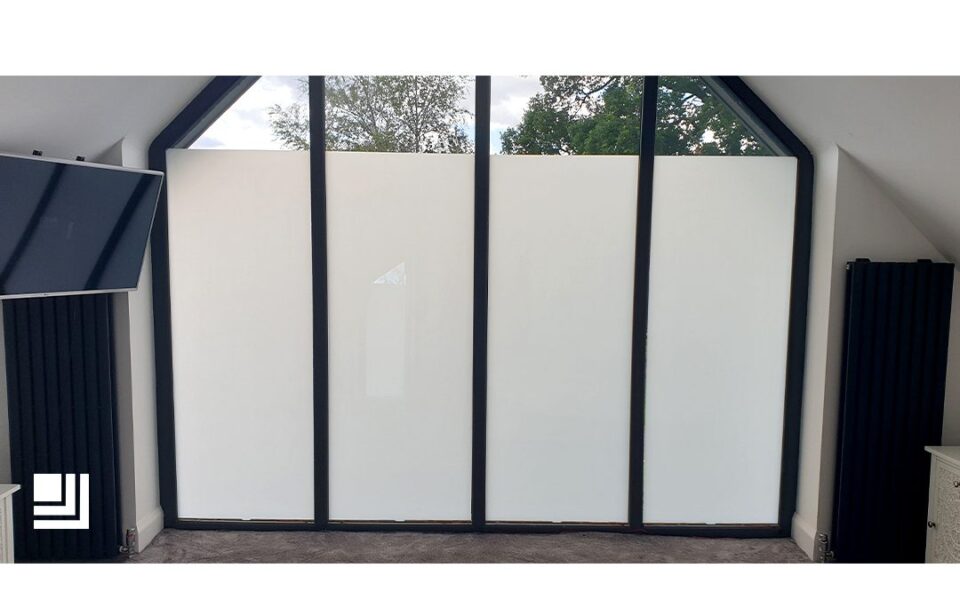
Great question! When it comes to residential privacy glass, there are several types you can consider, depending on how much privacy, natural light, and aesthetics you want. Here’s a breakdown of the most common options:
1. Frosted Glass
- How it works: Surface is sandblasted, acid-etched, or coated with a frosted film to diffuse light.
- Pros: Lets in light while obscuring direct visibility.
- Uses: Bathroom windows, entry doors, sidelights, office partitions.
2. Tinted Glass
- How it works: Glass has a colored or reflective coating that reduces visibility from the outside.
- Pros: Reduces glare and heat, offers partial privacy (especially in daylight).
- Uses: Large windows, sun-facing rooms, modern facades.
3. Reflective (One-Way Mirror) Glass
- How it works: A reflective coating makes the outside look like a mirror during the day.
- Pros: Strong daytime privacy while still allowing light inside.
- Cons: At night, when lights are on inside, privacy can be lost without curtains/blinds.
- Uses: Street-facing windows, offices, balconies.
4. Textured / Patterned Glass
- How it works: The Glass surface is molded or rolled with patterns (rain, ripple, geometric designs).
- Pros: Adds decorative style while obscuring views.
- Uses: Bathroom windows, decorative panels, entryways.
5. Smart Glass (Switchable Privacy Glass)
- How it works: Uses electrochromic or PDLC technology to change from clear to frosted at the push of a button.
- Pros: Instant privacy control, high-tech appeal, doubles as a projection screen.
- Cons: Expensive, requires electricity.
- Uses: Luxury homes, bathrooms, and meeting rooms.
6. Laminated Privacy Glass
- How it works: Layers of glass with an interlayer (like frosted or colored film) sealed inside.
- Pros: Provides both privacy and safety/security.
- Uses: Balcony railings, doors, skylights.
7. Stained or Decorative Glass
- How it works: Colored or art glass that distorts views while creating a design feature.
- Pros: Beautiful aesthetics, custom options, and natural light still enter.
- Uses: Entry doors, accent windows, historic or artistic homes.
Summary:
- For bathrooms: Frosted, textured, or smart glass.
- For large living room windows: Tinted or reflective glass.
- For modern luxury homes: Smart switchable glass.
- For decorative appeal: Stained or patterned glass.
Let’s compare how each privacy glass type performs day vs. night, since this is where a lot of people get surprised after installation:
Privacy Effectiveness: Day vs. Night
1. Frosted Glass
- Day: Excellent privacy (blurred, no clear view).
- Night: Same effect — works equally well regardless of lighting.
- Consistent 24/7 privacy.
2. Tinted Glass
- Day: Provides moderate privacy (especially when bright outside).
- Night: Becomes almost transparent if lights are on inside.
- Not reliable at night without curtains or blinds.
3. Reflective (One-Way Mirror) Glass
- Day: Extreme privacy (outside sees mirror effect).
- Night: Loses effect if interior is brighter — people outside can see in.
- Needs backup window coverings at night.
4. Textured / Patterned Glass
- Day: It obscures direct views, but allows light and vague shapes to pass through.
- Night: Same performance as day — consistent privacy.
- Good choice for bathrooms or entryways.
5. Smart Glass (Switchable Privacy Glass)
- Day: Can be switched clear or frosted at will.
- Night: Same — complete control regardless of lighting.
- Reliable 24/7 privacy (if budget allows).
6. Laminated Privacy Glass (with frosted or colored interlayer)
- Day: Provides constant privacy depending on the interlayer type.
- Night: Same performance — consistent.
- Great balance of safety + privacy.
7. Stained / Decorative Glass
- Day: Decorative patterns distort the view; provide medium privacy.
- Night: Still blocks clear view, but interior lights may reduce effectiveness if the glass has large transparent sections.
- Privacy depends on design density.
Best All-Day Privacy Options
- Frosted Glass
- Textured/Patterned Glass
- Smart Glass (switchable)
- Laminated Privacy Glass
Daytime-Only Privacy (needs curtains/blinds at night)
- Tinted Glass
- Reflective Glass
