
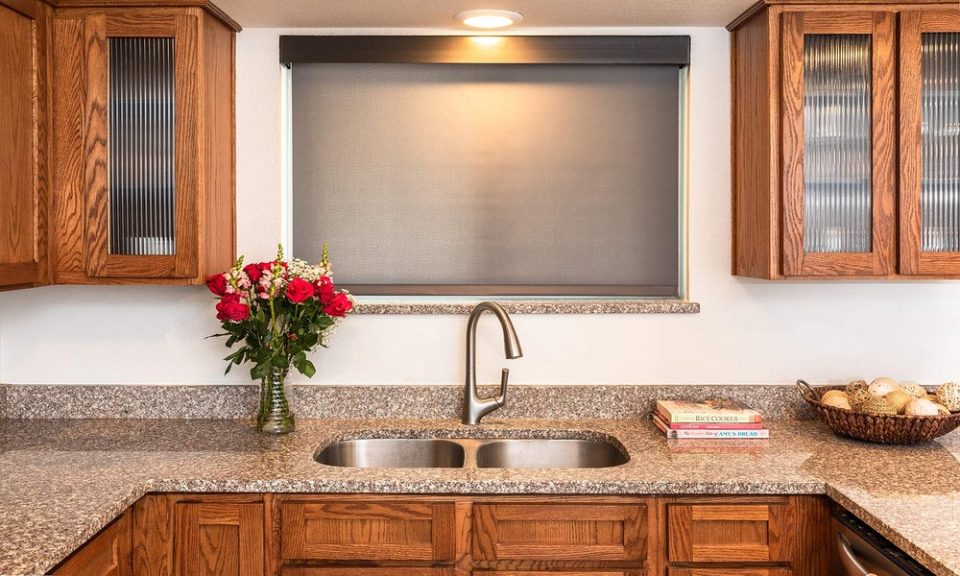
There is a reason kitchen windows feel harder to decorate than almost any other window in the house.
A living room window can exist purely for beauty. A bedroom window can prioritize softness and privacy. But a kitchen window – especially one sitting directly above the sink – has to work constantly. It deals with steam, water splashes, cooking smells, changing daylight, and the rhythm of everyday life. And somehow, despite all that practicality, it still needs to make the kitchen feel warm and inviting.
This balancing act is exactly why so many kitchen windows end up either overly utilitarian or unnecessarily complicated. Some are left completely bare because homeowners fear fabric near water. Others are crowded with bulky blinds or decorative treatments that block light and make the kitchen feel smaller than it actually is.
Designers tend to approach sink windows differently. They look for treatments that feel effortless – practical enough for daily life, but soft enough to bring personality and warmth into the kitchen.
And more often than not, the conversation comes down to two timeless options: roman shades and café curtains.
Both work beautifully above sinks. Both solve different design problems. And both create entirely different moods inside a kitchen.
The right choice depends less on trends and more on how you want the space to feel every day.
Why Kitchen Sink Windows Need a Different Approach
Kitchen windows are unique because they sit inside one of the hardest-working rooms in the home.
Unlike formal spaces, kitchens contain hard surfaces everywhere – stone countertops, tile backsplashes, metal fixtures, cabinetry, and appliances. Without balance, the room can quickly begin to feel cold or overly functional.
Window treatments soften that hardness. They introduce texture, movement, and warmth in a place that naturally contains so many rigid materials.
But practicality matters too.
A treatment above the sink has to survive moisture, occasional splashes, and frequent sunlight without becoming difficult to maintain. This is why long dramatic drapery usually feels impractical in kitchens. Heavy fabric absorbs odours, traps humidity, and often interferes with countertops or faucets.
The best kitchen window treatments feel visually light while still adding comfort to the room.
That is exactly where roman shades and café curtains excel.
The Practical Elegance of Roman Shades
Roman shades have become one of the most popular designer choices for kitchens because they solve practical problems beautifully without sacrificing softness.
Unlike long curtains, custom roman shades stay neatly contained within or just above the window frame. This immediately makes them feel cleaner and more functional around sinks where space is limited.
But importantly, they do not feel harsh or sterile the way plain blinds sometimes can.
A well-made roman shade still introduces texture and warmth into the kitchen, which is why designers use them so frequently in both traditional and modern homes.
Why Roman Shades Work So Well Above Sinks
One of the biggest advantages of roman shades is their compactness.
They lift fully upward when needed, allowing maximum daylight into the kitchen without excess fabric gathering around the countertop area. This is particularly valuable in smaller kitchens where visual clutter can make the room feel cramped very quickly.
Roman shades also help preserve clean architectural lines.
Because they sit close to the window, they create a tailored look that feels calm and intentional rather than busy. In contemporary kitchens especially, this streamlined quality can make the entire room feel more polished.
And practically speaking, fewer loose fabric panels near the sink means less interference with daily tasks.
Fabric Choice Changes Everything
Not all roman shades create the same atmosphere.
A stiff synthetic fabric may feel cold and overly formal in a family kitchen, while soft linen blends create a much warmer and more relaxed mood. Designers usually gravitate toward materials that balance durability with texture because kitchens benefit enormously from softness.
This is particularly important in spaces filled with stone, glass, and metal finishes.
Natural woven textures, cotton blends, and relaxed linen romans tend to feel especially beautiful in kitchens because they diffuse sunlight gently rather than blocking it harshly. The room stays bright while still feeling softened.
And visually, that softness matters more than many people realise.
A kitchen should not feel like a workspace alone. It should feel lived in.
Relaxed Roman Shades Feel Especially Inviting
Among all roman shade styles, relaxed romans often feel the most welcoming in kitchens.
Their softer curved folds prevent the room from becoming too rigid or architectural. They suit farmhouse kitchens, English-inspired interiors, warm transitional homes, and spaces that prioritize comfort over sharp minimalism.
Flat roman shades, meanwhile, feel cleaner and more structured. They work beautifully in contemporary or modern kitchens where simplicity is central to the design.
Neither is objectively better. The choice depends entirely on the personality of the kitchen itself.
The Enduring Charm of Café Curtains
Where roman shades feel tailored, café curtains feel charming.
There is something deeply nostalgic and comforting about them. Perhaps it is their association with old European cafés, cottage kitchens, and sunlit breakfast corners. Or perhaps it is simply the way they soften a window without shutting out the world entirely.
Unlike full curtains, café length custom curtains cover only the lower half of the window, leaving the upper section open for natural light. This creates a kitchen that feels bright, airy, and intimate all at once.
And that balance is exactly why designers continue returning to them decade after decade.
Why Café Curtains Work Beautifully in Kitchens
Natural light is one of the most valuable design elements in a kitchen.
It makes countertops glow, brightens cabinetry, and makes even small kitchens feel more open. Café curtains preserve that light beautifully because they maintain privacy without darkening the room.
This becomes especially useful in kitchens facing neighbouring homes or busy streets where complete openness may feel uncomfortable.
The lower half of the window remains softly covered while sunlight continues pouring through the top.
The result feels casual, effortless, and welcoming.
Café Curtains Add Warmth Instantly
Many kitchens today contain sleek cabinetry, hard-edged islands, and modern finishes. While beautiful, these elements can sometimes make the room feel visually cold.
Café curtains soften that atmosphere immediately.
Even very simple linen café curtains introduce movement and humanity into the kitchen. They make the room feel collected rather than overly manufactured.
This is why café curtains work so beautifully in:
- Cottage kitchens
- Farmhouse interiors
- Vintage-inspired homes
- Coastal spaces
- Warm transitional kitchens
They bring emotional warmth into the room without requiring elaborate decoration.
Simplicity Keeps Café Curtains Timeless
The key to making café curtains feel elevated rather than dated is restraint.
Designers usually avoid excessive ruffles, overly busy prints, or heavy ornamentation. Instead, they rely on:
- Soft linen textures
- Subtle stripes
- Crisp cotton
- Relaxed tailoring
- Neutral tones
The beauty comes from proportion and softness rather than decorative excess.
Done well, café curtains feel timeless rather than trendy.
So Which Is Better: Roman Shades or Café Curtains?
The answer depends entirely on the mood you want your kitchen to have.
Roman shades feel:
- Tailored
- Streamlined
- Architectural
- Clean and refined
Café curtains feel:
- Soft
- Charming
- Relaxed
- Warm and nostalgic
A sleek modern kitchen may benefit more from the simplicity of roman shades, while a cozy cottage kitchen may feel incomplete without the softness of café curtains.
And interestingly, designers sometimes combine both.
A woven roman shade paired with simple café curtains can create incredible depth and warmth while still remaining highly practical. Layering treatments this way often gives kitchens the collected, designer-quality feeling people struggle to achieve with a single flat window covering.
Final Thoughts: The Real Goal Is Balance
The best kitchen window treatments are rarely the most dramatic ones.
They are the ones that quietly support the room – softening the architecture, filtering the light beautifully, and making the kitchen feel welcoming throughout the day.
That is why designers think beyond trends when choosing treatments for sink windows. They consider how the room feels at 8 AM with sunlight pouring across the counter. They consider how steam rises while cooking dinner. They consider how the window looks from the dining table at night.
Because ultimately, kitchen design is not only about appearance. It is about the atmosphere. And something as simple as the right roman shade or a softly gathered café curtain can completely change the emotional warmth of the entire room.
