
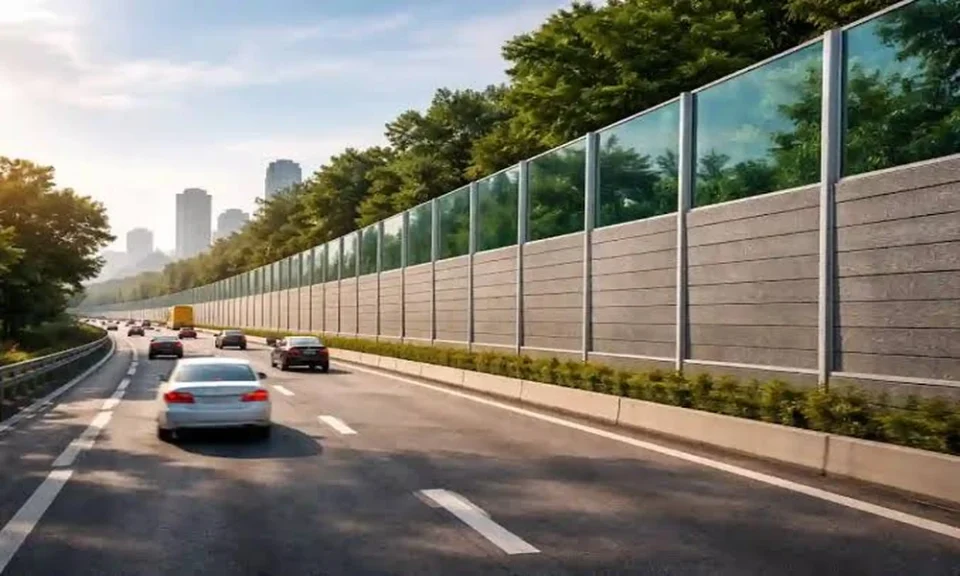
Boise’s rapid expansion has brought a great deal of traffic with it. As subdivisions spread toward the freeway corridors and arterials like Eagle Road, State Street, and Chinden Boulevard carry heavier loads, more homes today sit within earshot of constant road noise. For families whose backyards border Interstate 84 or one of the valley’s busy thoroughfares, the constant drone of tires and engines can erode the comfort of an otherwise pleasant property. Many of these households are finding that the same dense material trusted for concrete fence installation Boise residents rely on for durability also ranks among the most effective noise barriers available.
Why Highway Noise Is Hard to Escape
Road noise is more persistent than most homeowners expect. Unlike an occasional disturbance, traffic generates a near-continuous wash of low- and mid-frequency sound that carries easily across open ground and reflects off hard surfaces. In a fast-growing area like Boise, where new development often rises right alongside major roadways, the problem becomes worse due to more vehicles, higher speeds, and fewer natural buffers between the pavement and the patio. Landscaping and ordinary fencing do little to help, because sound slips through gaps and passes straight through lightweight materials.
The Science of a Concrete Sound Barrier
Blocking noise effectively comes down to physics, and concrete satisfies the requirements better than nearly any alternative. The following properties make the difference:
- Mass. Sound is a form of energy, and heavy, dense materials resist being set into vibration. A solid concrete panel has too much mass for sound waves to pass through easily, whereas a hollow wood or vinyl fence transmits much of this energy to the other side.
- A continuous, gap-free surface. Noise exploits the smallest openings, so the seamless face of a concrete barrier leaves it nowhere to leak through. Where slatted or board fences let sound filter between joints, a solid span stops it.
- Height and coverage. An effective barrier must interrupt the direct line of sight between the noise source and the listener. A tall, unbroken concrete wall breaks this path, deflecting and absorbing the waves before they reach your outdoor space.
Together, these qualities allow a well-built concrete sound barrier to cut perceived noise, transforming a yard that once buzzed with traffic into a place where conversation and quiet are possible again.
An Improvement You Can Hear
A properly engineered concrete barrier can reduce noise levels by as much as 95 percent, turning the relentless hum of a nearby highway into a faint background murmur. Petrified Forest Boise designs its sound barriers to absorb sound waves and prevent them from traveling through the air. The company offers free on-site estimates, so homeowners can assess the right height and placement for their particular lot before committing to a project.
The Privacy Dividend
Noise reduction is rarely the only benefit that homeowners notice. Because a sound barrier is a tall, solid structure, it delivers privacy along with the quiet. A backyard that once felt exposed to a passing road becomes a secluded retreat, shielded from the sight and the sound of traffic. For properties along Boise’s busier corridors, this dual advantage often justifies the investment on its own, and adds a sense of enclosure that lighter fencing cannot match.
Planning a Barrier for Your Property
Every lot presents its own acoustic challenge, which is why placement and dimensions matter. The closer a barrier sits to the noise source, the more effective it tends to be, and a greater height generally yields a greater reduction. A conversation with an experienced installer helps determine the optimal configuration for your specific situation, taking into account the direction of the road, the layout of the yard, and the elevation of the surrounding terrain.
